

 Facebook
 Google
 LinkedIn
https://lasma.eu/en/search/products
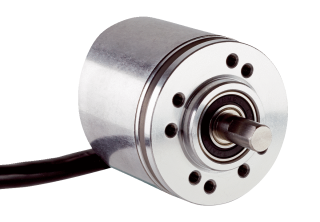
Incremental encoders are the standard solution for speed measurement, position monitoring, and pulse counting in industrial machinery. When absolute position retention after power-off is not required, incremental encoders deliver reliable performance at lower cost. Suitable for packaging, printing, textile, and intralogistics applications with demanding mechanical and environmental requirements.
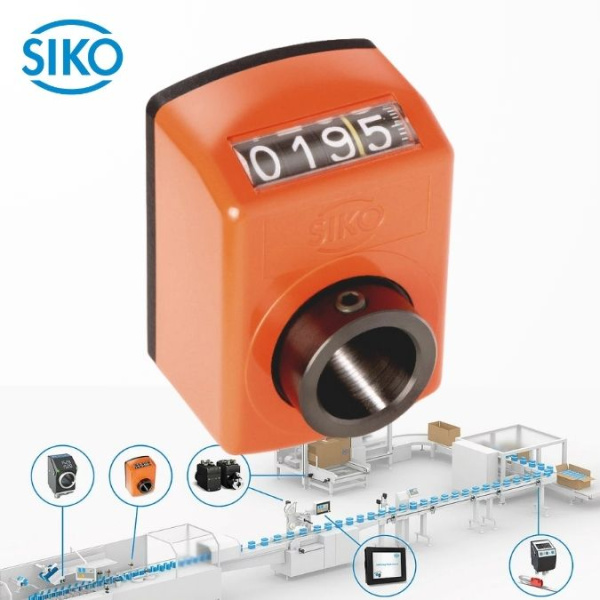
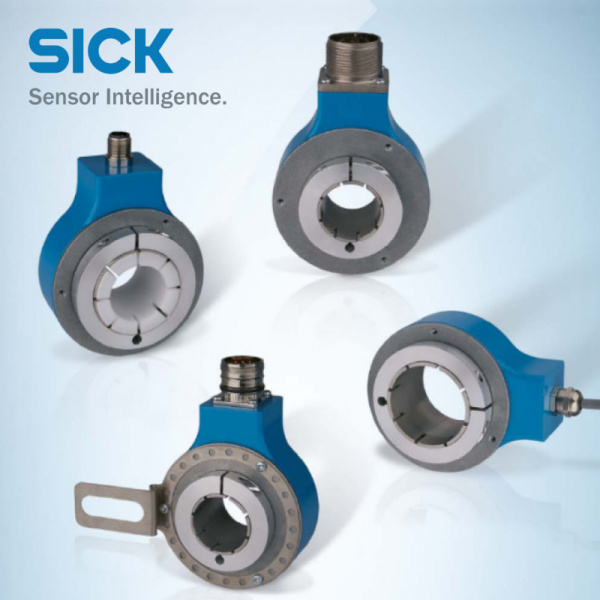
Incremental encoders — also referred to as rotary pulse encoders — generate pulse sequences whose frequency is proportional to rotational speed. Counting pulses enables position tracking and rotation counting. This category includes rotary incremental encoders from SIKO and SICK in solid shaft and hollow shaft configurations, covering compact designs from Ø28 mm housing diameter up to large-format models with hollow shaft bores up to 42 mm. Typical applications include packaging machines, printing machines, textile machines, woodworking equipment, conveyor systems, intralogistics shuttles, and asynchronous motor speed feedback.
When specifying an incremental encoder, evaluate the following parameters:
| Feature | Optical scanning | Magnetic scanning |
|---|---|---|
| Resolution | Up to 65,000 PPR | Moderate to high |
| Contamination resistance | Moderate | High (oils, dust, water) |
| Shock/vibration resistance | Standard | High |
| Typical application | Precision positioning, printing | Heavy industry, mobile equipment |
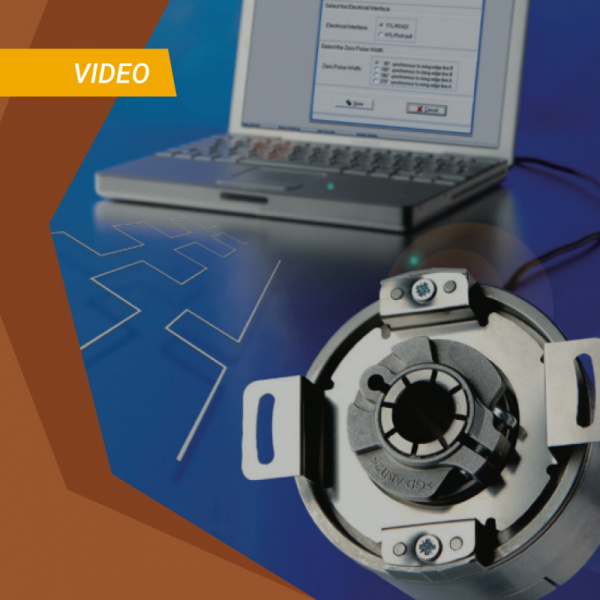
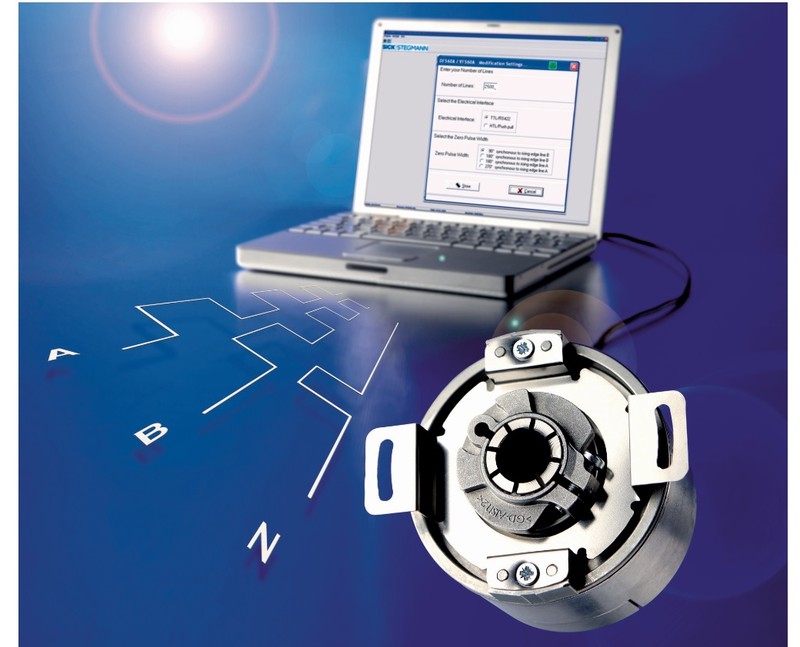
This category stocks incremental encoders from SIKO and SICK, two established European encoder manufacturers. Both brands offer programmable variants configurable for interface type, resolution, zero point, and zero pulse width — reducing the need for application-specific custom orders. Hollow shaft and solid shaft variants are available across multiple housing sizes. Contact our technical sales team for selection support or volume pricing on OEM quantities.
Specifications subject to change. Verify technical data against current manufacturer documentation before final selection.
HTL (push-pull) outputs operate at supply voltage levels (typically 10–30 V DC) and are well-suited for longer cable runs and electrically noisy industrial environments. TTL/RS422 outputs operate at 5 V differential signal levels, offering higher switching frequencies and compatibility with standard PLC and motion controller inputs. Choose HTL for robust field wiring; choose TTL/RS422 when high pulse frequencies or RS422-compatible inputs are required.
Incremental encoders only count pulses while powered — they do not retain position data during power-off. On restart, the controller has no knowledge of the current shaft position until a reference run (homing) is performed. This is acceptable in many speed-control and relative-positioning applications, but unsuitable for axes that must know absolute position immediately on power-up, such as vertical axes or multi-axis robots. In those cases, an absolute rotary encoder is the correct selection.
Washdown applications involving high-pressure cleaning with water or cleaning agents require a minimum of IP67, and ideally IP69K, which certifies resistance to high-pressure, high-temperature water jets at close range. SICK's stainless steel encoder variants such as the DBS60 and DFS60 achieve IP69K and are designed for food, beverage, and pharmaceutical processing environments. Standard industrial encoders rated IP65 are not suitable for direct washdown exposure.
Required PPR depends on the positioning resolution needed at the load, the mechanical transmission ratio between encoder and load shaft, and the maximum input frequency supported by the controller. Calculate the minimum PPR as: required angular resolution (degrees) = 360 / PPR × gear ratio. Also verify that at maximum shaft speed, the resulting pulse frequency (PPR × RPM / 60) does not exceed the counter input frequency limit of your PLC or drive. For high-speed applications, models such as the SICK DFS60 with up to 65,000 PPR and programmable resolution allow fine-tuning without changing hardware.