

 Facebook
 Google
 LinkedIn
https://lasma.eu/en/search/products
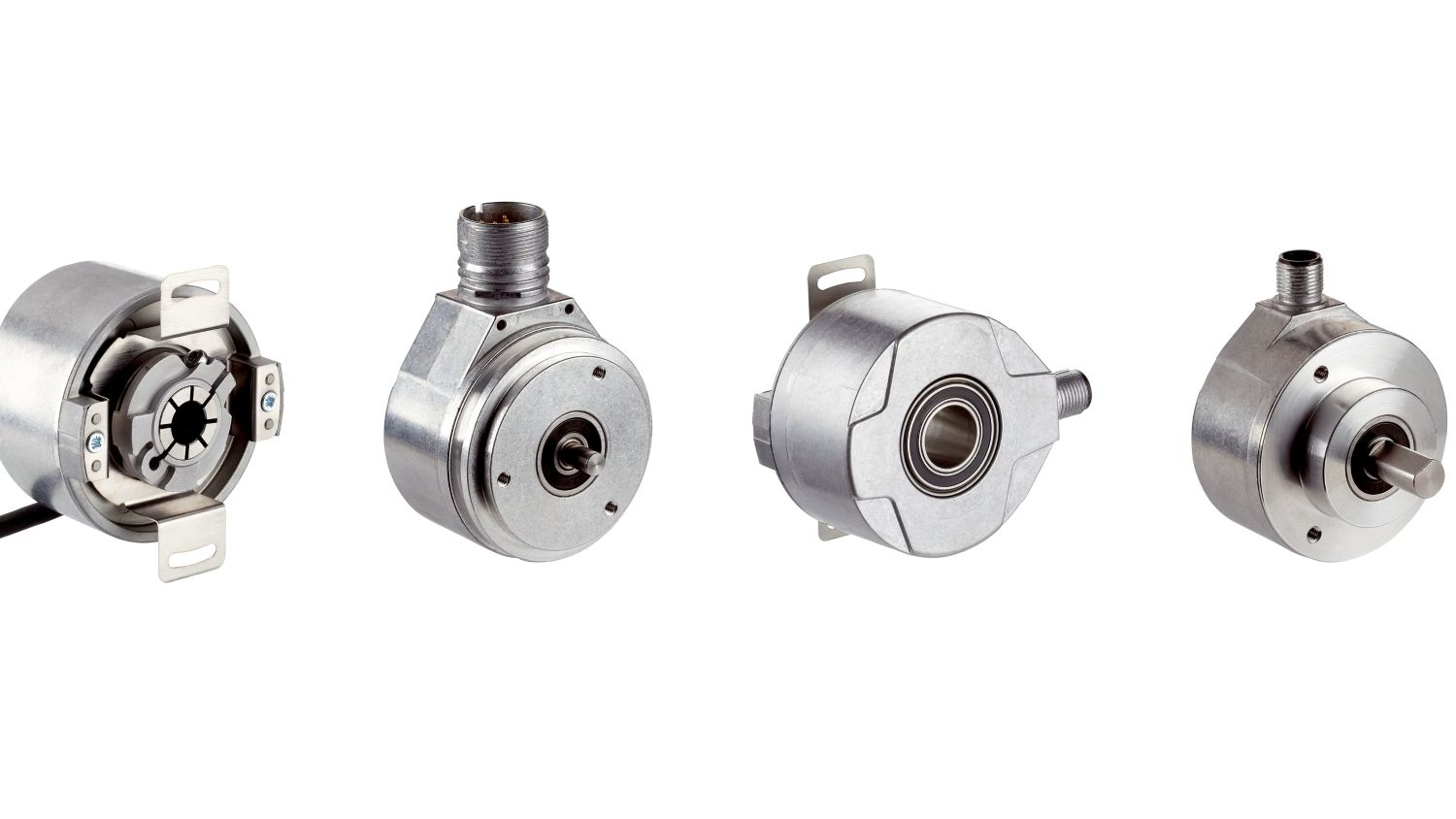
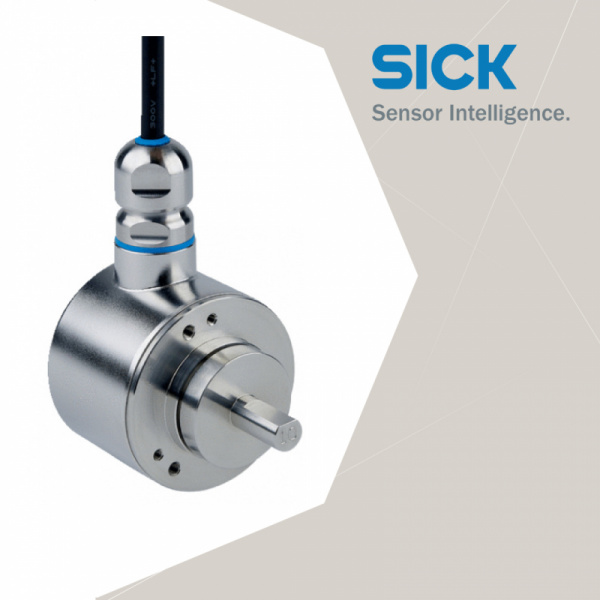
SICK DFS60 is a high-resolution programmable incremental encoder with a 60 mm housing, a wide range of mechanical connections, and flexible electrical connection options. Thanks to the programming functions, the DFS60 encoder output signal, pulse count, counting direction, and zero pulse parameters can be adapted to a specific machine or to replace an existing encoder.
This solution is especially suitable for changing and dynamic production environments, where fast replacement of a defective encoder, high machine availability, and the possibility to reduce the number of different spare encoders in stock are important. A wide range of programmable encoders is available in our warehouse in Riga, so we can help select and program them and ensure prompt delivery for your request.
Parameter | DFS60 features |
|---|---|
Housing diameter | 60 mm |
Pulses per revolution | Up to 65 536 pulses, i.e. 16-bit resolution |
Programmable parameters | Pulse count, counting direction, zero pulse position and width, output signal level |
Electrical interfaces | TTL/RS-422, HTL/push-pull, Sin/Cos |
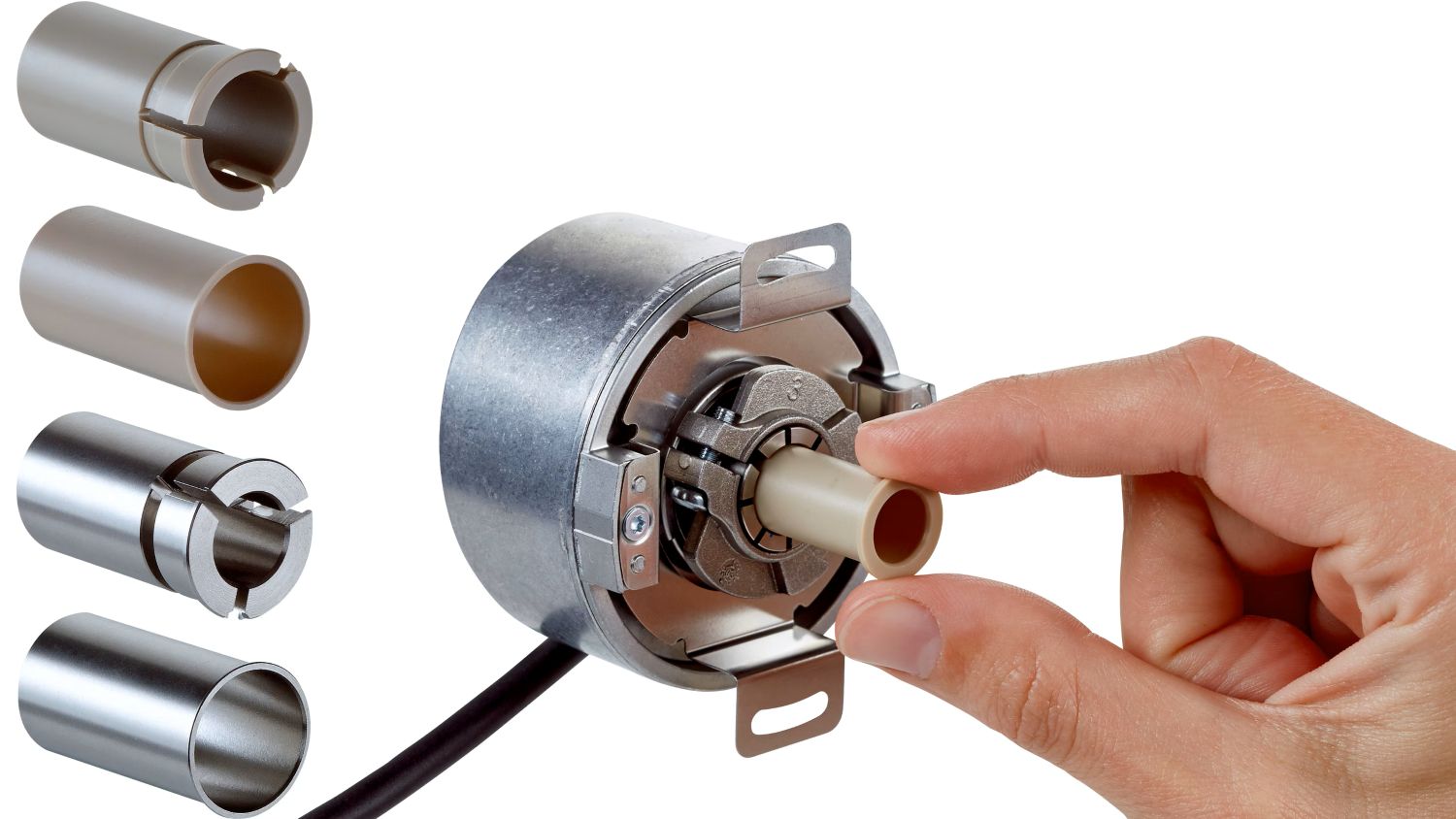
Shaft versions | Solid shaft, hollow shaft, and through hollow shaft |
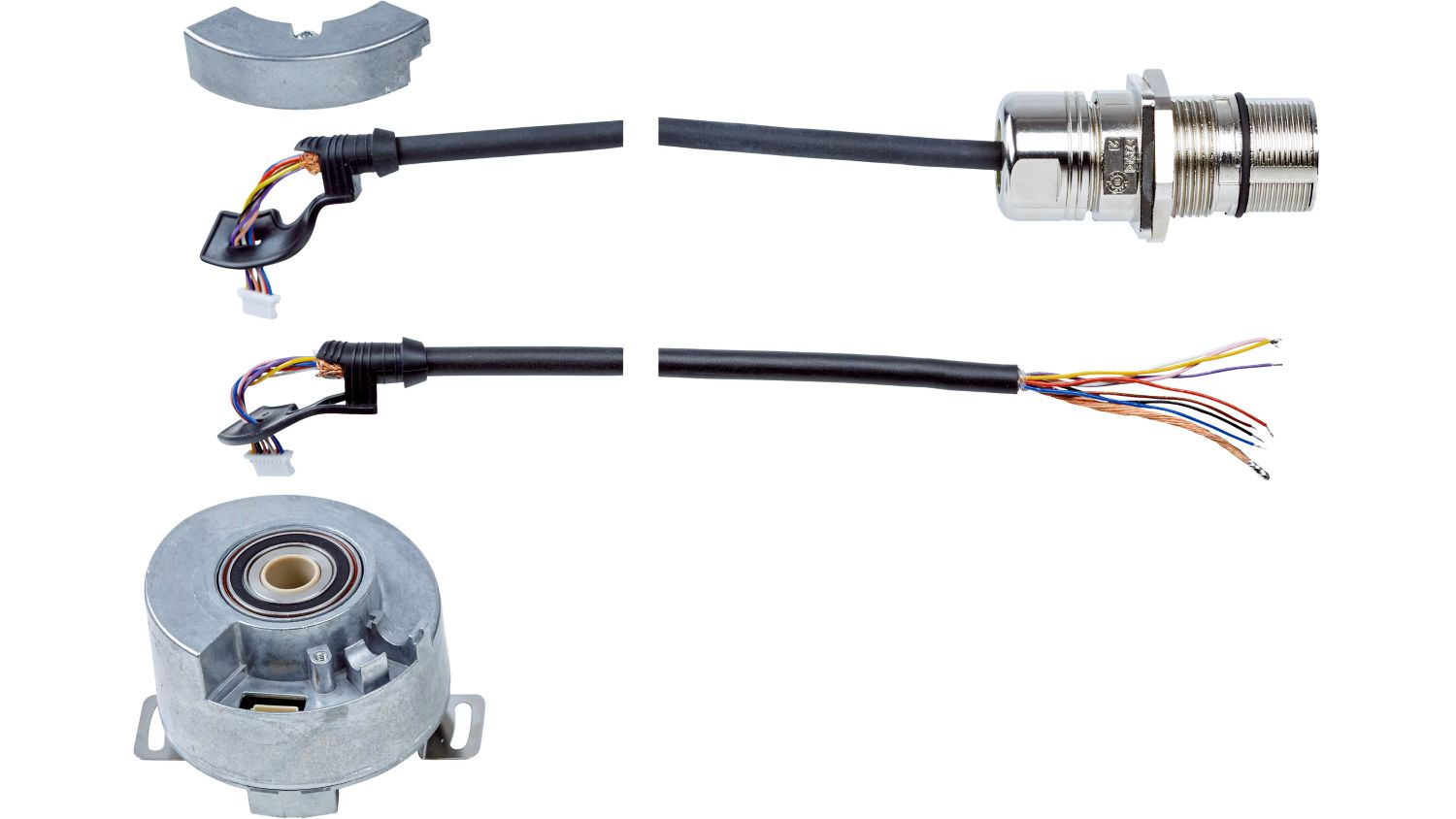
Connections | M12 or M23 connector, as well as universal cable |
Housing protection | IP65/IP67 |
Programming tools | SICK SOPAS, PGT-08-S, and PGT-10-Pro |
DFS60 is suitable when a universal and adaptable incremental encoder is required, which can be used in different machines without the need to keep a separate encoder model for each solution.
When a defective encoder needs to be quickly replaced with equivalent technical parameters.
When encoders with different pulse counts and output signals are used in one plant.
When high measurement accuracy and resolution up to 16 bits are important.
When flexible mechanical mounting with different flanges, shafts, and hollow shafts is required.
When reliable operation is required in an industrial environment with dust, moisture, or temperature fluctuations.
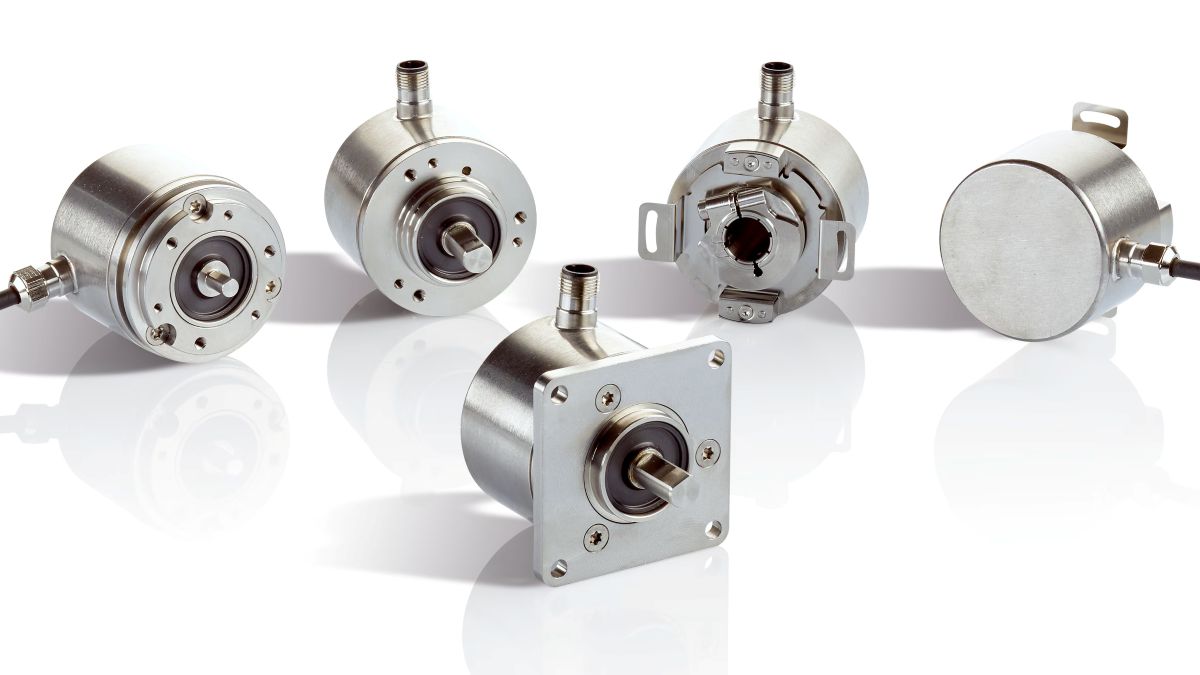
One of the key advantages of the SICK DFS60 is the extensive programming options. The user can adapt the encoder's key electrical parameters to a specific control system, frequency inverter, PLC, or to replace an existing encoder.
Pulses per revolution: from 1 to 10 000 imp/rev, special models up to 65 536 imp/rev.
Electrical interface: TTL/RS-422, HTL/push-pull or Sin/Cos.
Zero pulse or Z signal position: can be adapted to the actual shaft position.
Zero pulse width: for example, 90, 180 or 270 electrical degrees, depending on the application.
Counting direction: can be adapted to the machine movement or control logic.

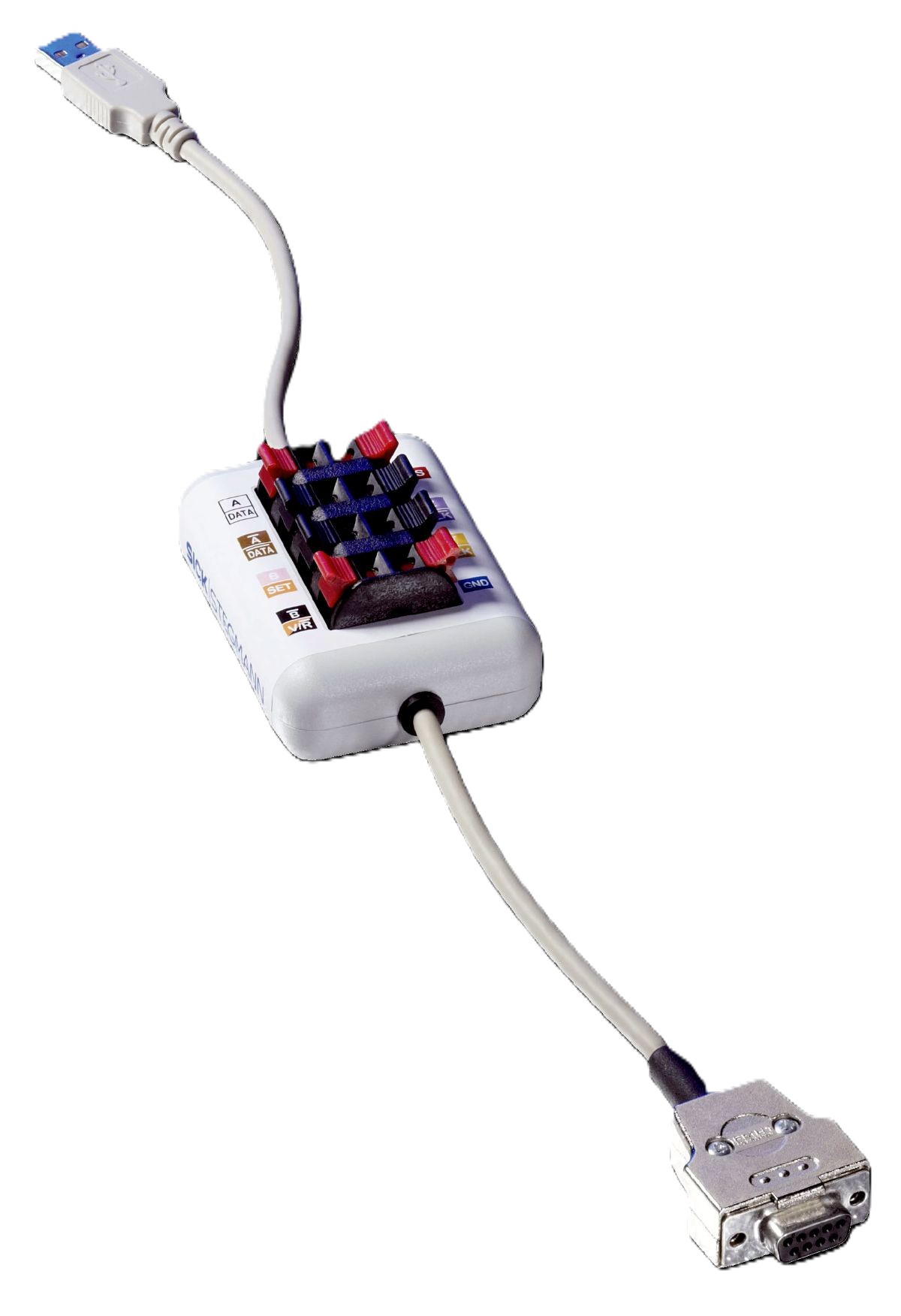
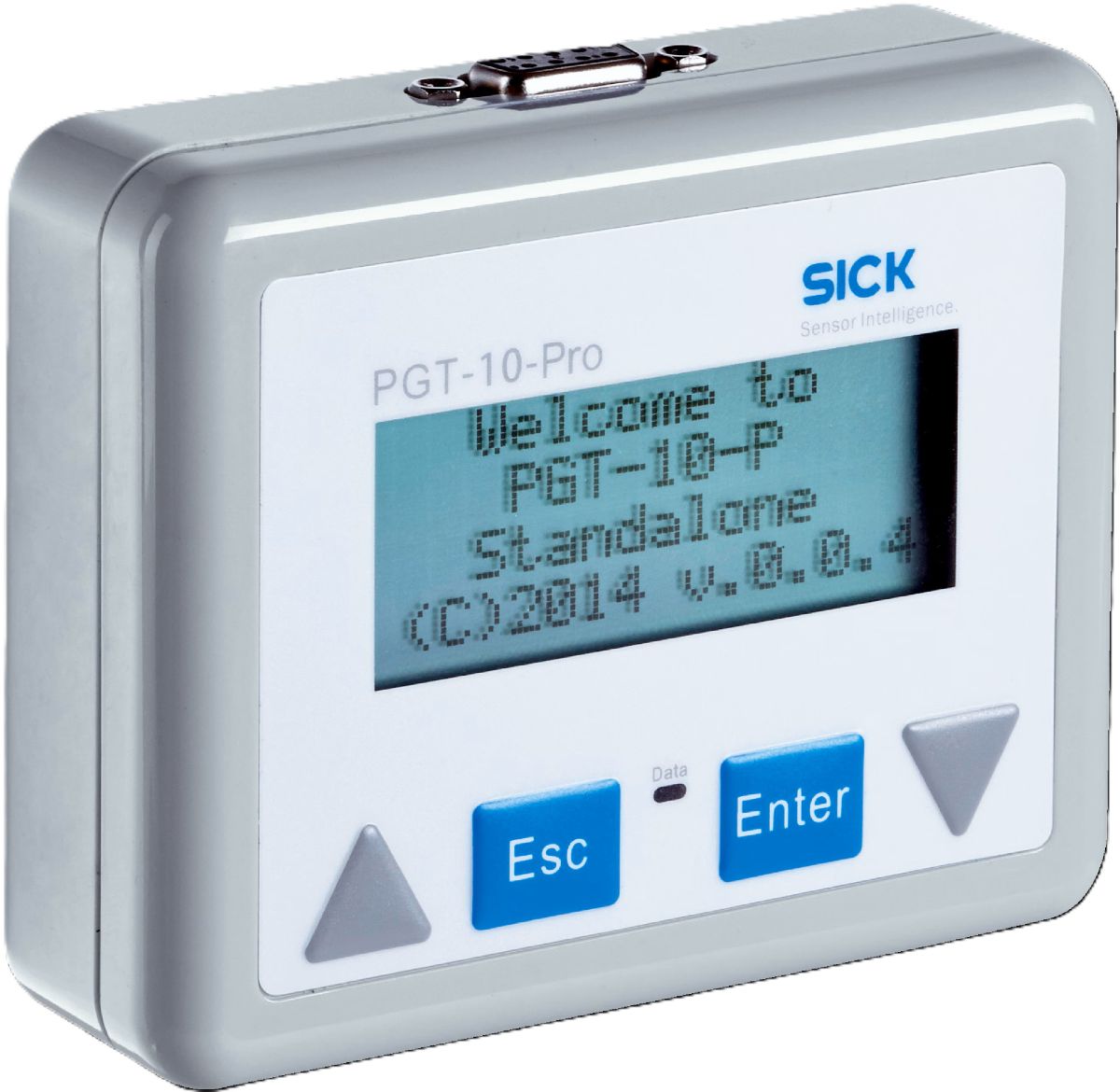
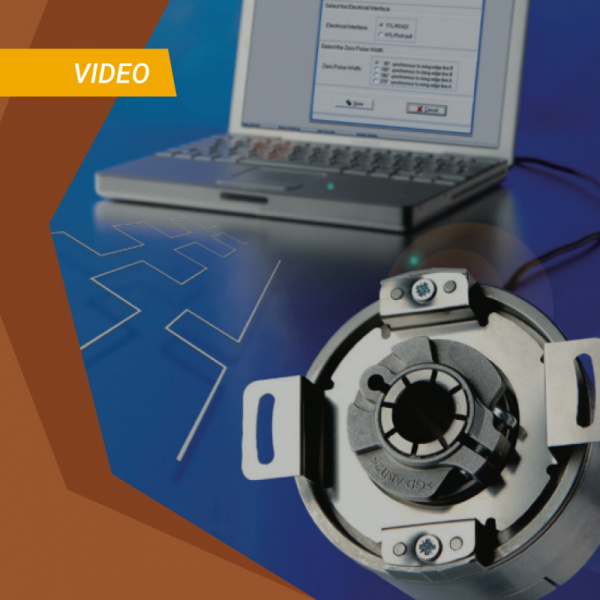
For setting the SICK DFS60 encoder parameters, both a computer-connected programming tool and a portable handheld programmer can be used. Programming is done with SICK SOPAS software or the appropriate programmer, depending on the working environment and required convenience.
Programming tool | When to choose? | Link |
|---|---|---|
PGT-08-S | Suitable for programming with a computer via USB connection and SICK SOPAS software. | |
PGT-10-Pro | Suitable for service and on-site work when the encoder needs to be programmed conveniently without a computer. |
To connect the encoder to the programmer, a suitable connector adapter may be required. After saving the parameters in the encoder, its operation can be checked in the SOPAS program, as well as the zero pulse position can be aligned with the actual encoder shaft position.
Different output signal types are possible for DFS60 series encoders. Correct interface selection is essential so that the encoder works correctly with the control system, PLC, counter, or frequency inverter.
Output type | Description | Typical application |
|---|---|---|
TTL / RS-422 | 5 V signal level regardless of supply voltage. | For precise control solutions and systems requiring a stable 5 V signal. |
HTL / push-pull | The output signal corresponds to the encoder supply voltage level. | For industrial control systems where 24 V signals are often used. |
Sin/Cos | Analog sine/cosine outputs for precise signal processing. | For applications requiring particularly high motion control precision. |

The zero pulse or Z signal is triggered after one full revolution of the encoder shaft and helps determine or synchronize the exact mechanical position. It is especially important in positioning, counting, and multi-axis motion synchronization solutions.
90 electrical degrees – a commonly used standard solution where the index signal is synchronized with the edges of the A and B signals.
180 or 270 electrical degrees – may be useful for compatibility with older machines or specific control systems.
Pulse defined in mechanical degrees – suitable for solutions where the electronics have a limited response time or special synchronization is required.
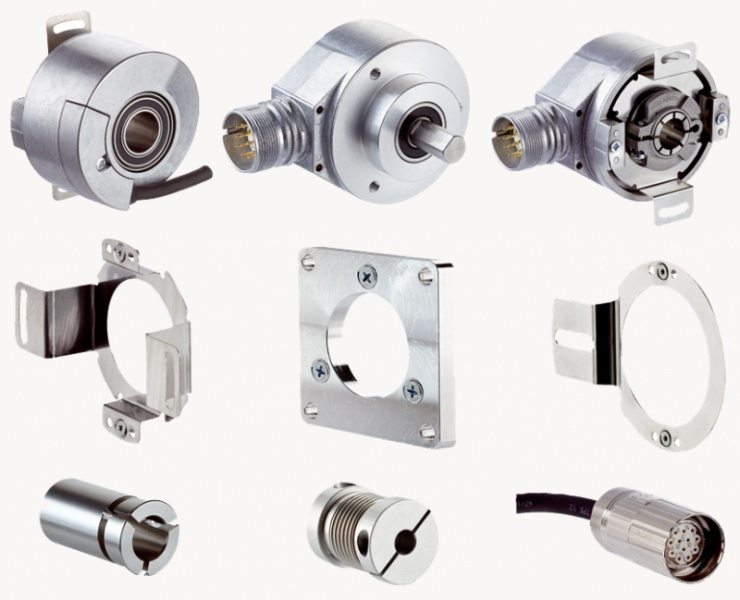
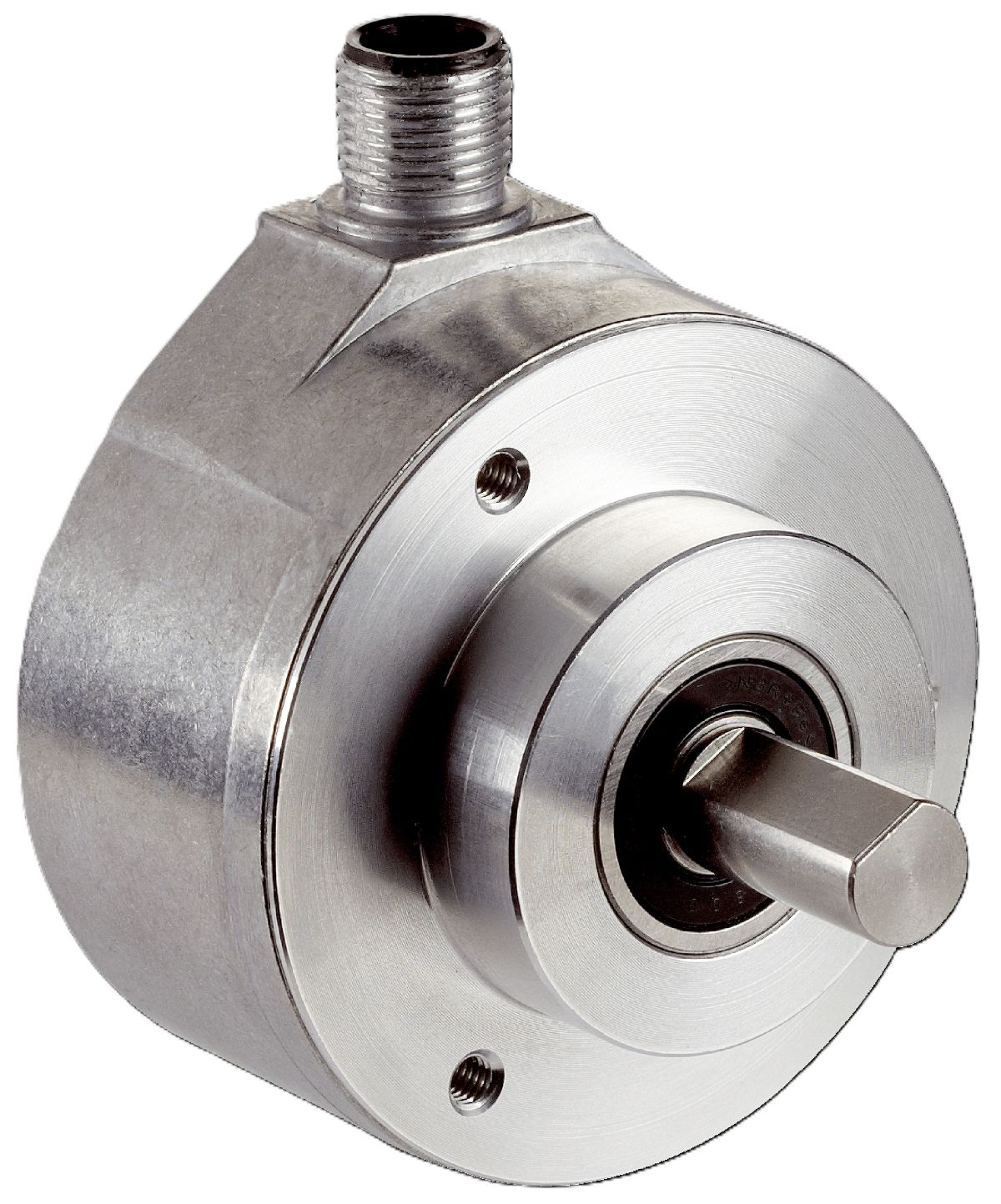
SICK DFS60 offers a wide range of mechanical and electrical versions, so one encoder series can be adapted to different automation solutions.
Category | Options |
|---|---|
Mechanical mounting | Servo flange, clamping flange, solid shaft, hollow shaft, through hollow shaft |
Shaft diameters | 6 mm, 10 mm and hollow shaft versions 6, 8, 10, 12 and 15 mm |
Connectors | M12 or M23, radial or axial connection |
Cables | 8-pin shielded cable in various lengths, for example 1,5 m, 3 m, 5 m or 10 m |
Housing material | Aluminum or stainless steel, depending on the version |
Housing protection | IP65 or IP67 |
Reduced number of spare parts: one programmable encoder can be adapted to different technical parameters.
Faster replacement of a defective encoder: parameters can be set according to the existing solution.
High machine availability: lower risk of downtime when a spare encoder is in stock and programmable on site.
Flexible installation: different mechanical connections, shafts, connectors, and cable solutions.
Suitable for demanding industrial environments: high protection class, wide temperature range, and robust mechanical design.
If a programmable universal incremental encoder is needed, the most suitable choice is usually the SICK DFS60. However, for especially harsh environments or large shafts, other SICK encoder solutions may be more suitable.
Model | When to choose? | Main advantage |
|---|---|---|
SICK DFS60 | If a programmable, universal incremental encoder is needed for different automation solutions. | Programmable parameters, high resolution, flexible connections. |
SICK DFS60 Inox | If DFS60 functionality is needed in a harsher environment with increased resistance to external influences. | Stainless steel construction and suitability for demanding environments. |
SICK DBS60 Inox | If a stainless steel incremental encoder is needed for food, beverage or washdown environments. | IP67/IP69K versions and high resistance to aggressive conditions. Learn more about SICK DBS60 Inox |
SICK DGS80 | If an encoder with a large hollow shaft diameter is needed for large motors or rotating structures. | Large hollow shaft diameters 30 mm and 42 mm. |
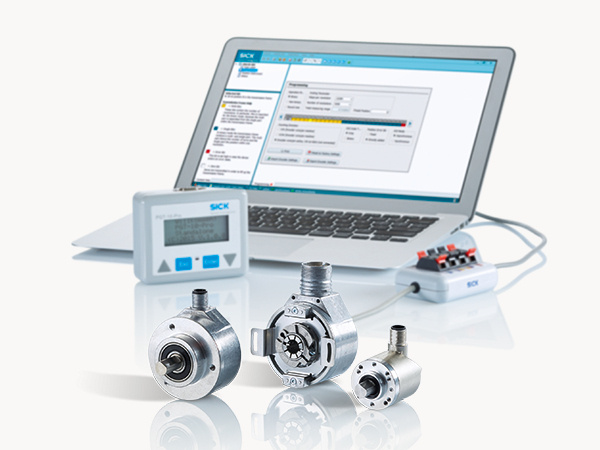
To reduce downtime of production equipment and the stock of various spare encoders, it is possible to choose the SICK DFS60 programmable encoder in a set with a programmer and the necessary accessories.
programmable encoder + coupling + connector + encoder programmer
Such a set allows on-site adjustment of the encoder to the required technical parameters, including pulse count, output signal type and zero pulse settings.
If you need a SICK DFS60 programmable incremental encoder, an encoder programmer or a replacement for an existing encoder, contact the ZTF Lāsma specialists. We will help select the most suitable solution, program the encoder and ensure prompt delivery.
Send the model or photo of the existing encoder – we will help find a SICK DFS60 replacement.