Facebook
 Google
 LinkedIn
https://lasma.eu/en/search/products
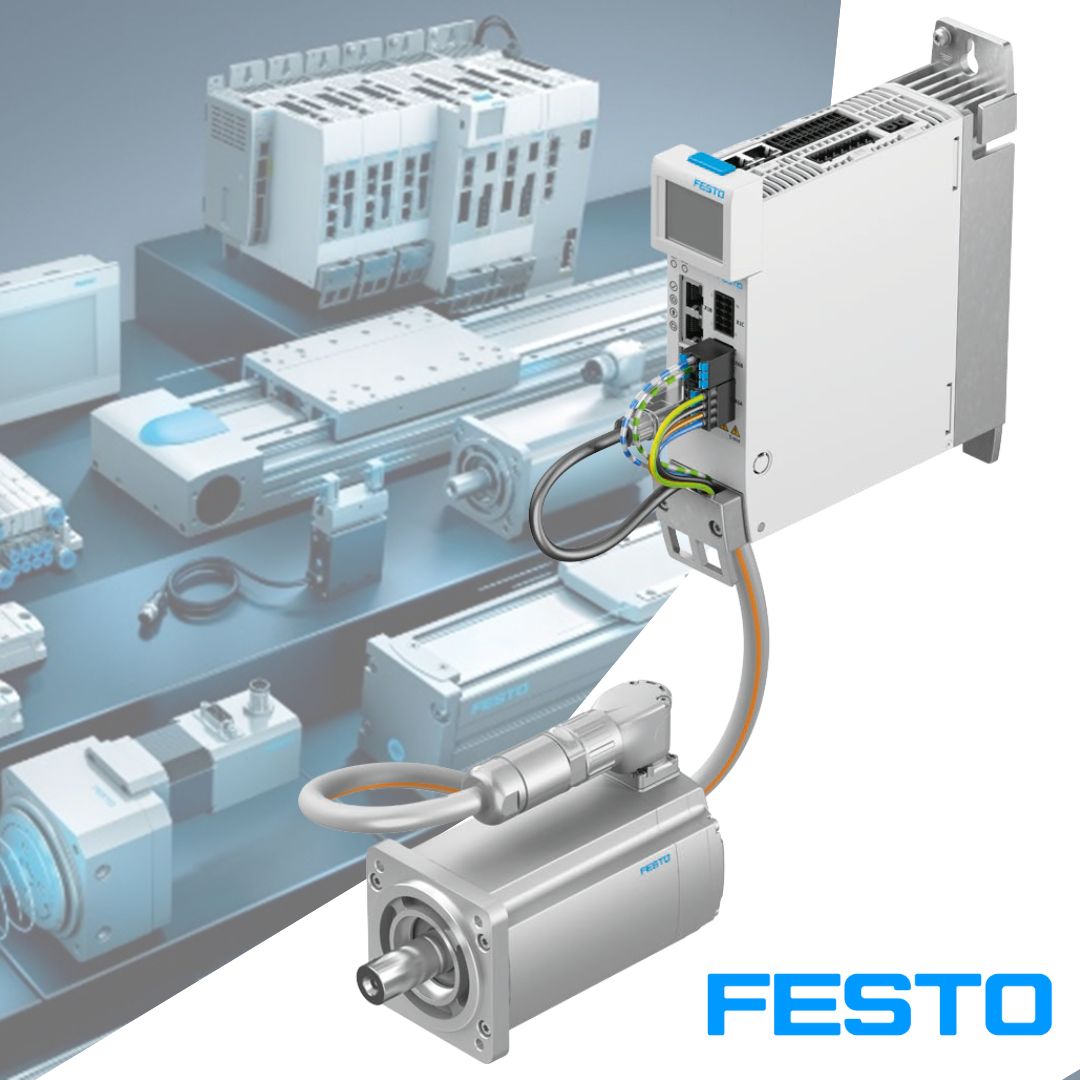
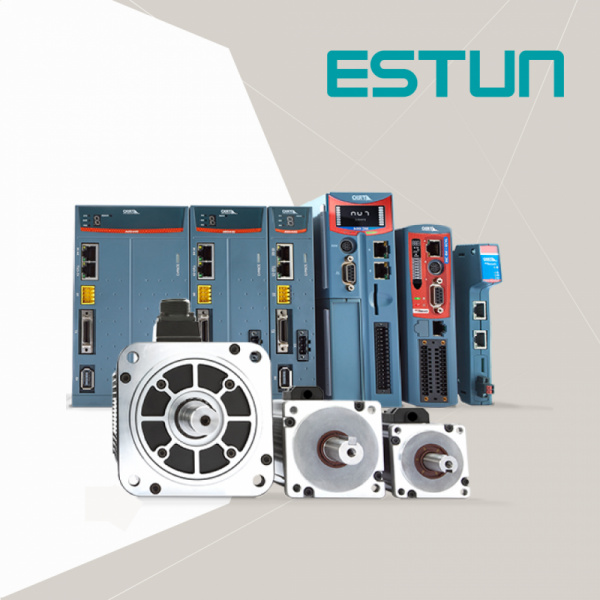
A servo motor is a permanent-magnet synchronous motor with a built-in encoder that gives the drive precise torque and position feedback. Here you will find Schneider Electric Lexium BMH, BSH and BCH servo motors, Siemens SIMOTICS S-1FK2 and 1FL6, Festo EMMT-AS servo motors and EMMT-ST stepper motors, and Estun EM3A motors from 50 W up to several kW. Versions are available with holding brake, plain or keyed shaft and different encoders. Choose the motor together with a servo drive of the same series.
A servo motor is chosen by torque, speed and inertia, not by power alone. Motors of the same power can have different inertia, which strongly affects control quality.
Compare rated torque with the average load torque over the cycle, and peak torque with acceleration peaks. Low-inertia motors (such as Festo EMMT-AS-LS or low-inertia Lexium BCH) suit fast, short moves; medium and high-inertia motors suit large loads and stable control. Lexium BCH motors state inertia in kg·cm² in the description.
A single-turn absolute encoder knows the position within one revolution; a multi-turn encoder keeps it across the full travel even after power loss, so no homing is needed. A holding brake is required on vertical axes so the load does not drop when the motor is off. Connect motor and drive with the matching cables.
A servo motor is a permanent-magnet synchronous motor with an encoder, controlled by a servo drive in a closed loop. An induction motor runs at a speed set by supply frequency and gives no position information.
When precise positioning is needed at low speed and low cost. Festo EMMT-ST with encoder does not lose steps, but its torque falls faster at high speed than a servo motor's.
If load inertia is much larger than motor inertia or high torque is needed at low speed, a gearbox reduces the inertia ratio and allows a smaller motor.
The housing is protected against dust and water jets. The shaft seal often has lower protection unless an oil seal is fitted – this is shown in the motor code.
Too high average torque, frequent braking or incorrect tuning. Check the load cycle and, if needed, choose a larger motor or add a gearbox.