

 Facebook
 Google
 LinkedIn
https://lasma.eu/en/search/products
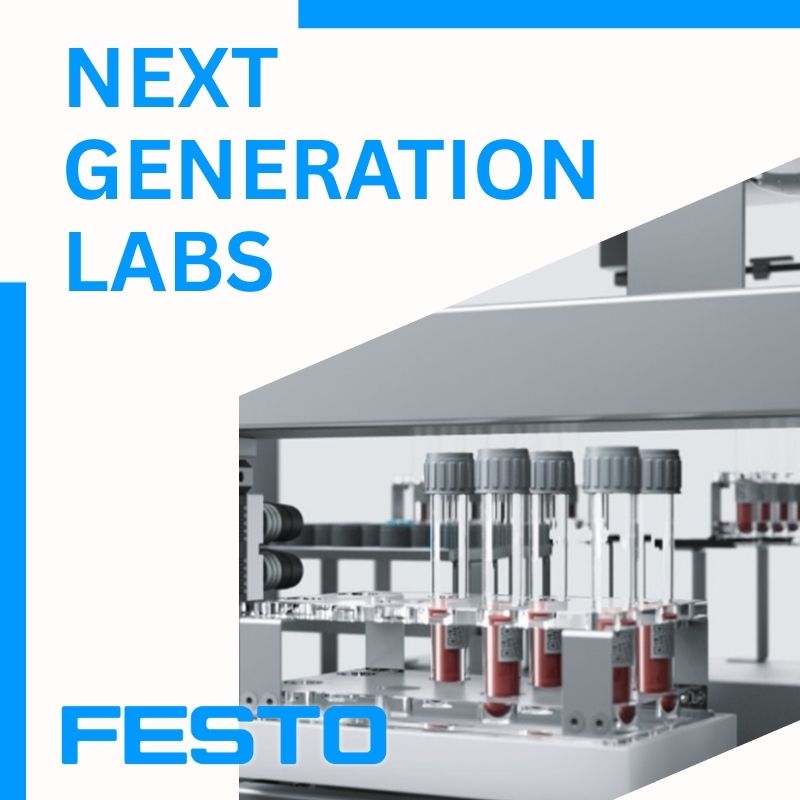
Modern laboratories face increasing demands for precision, speed, and repeatability — whether in diagnostics, pharmaceuticals, biotechnology, or research. Festo, with decades of experience in motion control and mechatronics, has developed a specialized set of solutions for laboratory automation included in the company’s LifeTech portfolio.
Festo LifeTech focuses on medical technologies and laboratory automation, offering both standard components and customized subsystem solutions. These are developed in collaboration with customers already at the project planning stage to reach an appropriate and practically implementable solution faster.
One of the most important requirements in laboratory automation is reliable and precise sample movement — horizontally, vertically, and along multiple axes simultaneously. Festo portal systems are designed exactly for this purpose, providing precise motion within the compact workspace typical of benchtop laboratory equipment.
 Depending on application complexity, there are two main portal solutions available:
Both systems can be integrated with Festo linear actuators, motion controllers, and grippers to form complete automated work cells.
For example, in a sample processing system, a portal can move a microtiter plate from the loading position to a pipetting station and onward to an analysis device — without manual intervention. The system is maintenance-free, tested, and documented, facilitating validation processes in regulated industries.
 Precise handling of sample containers — such as vials, tubes, and microtiter plates — is one of the main tasks in laboratory automation. Festo has developed specialized gripper modules that combine multiple functions in one compact tool, reducing system complexity and improving cycle times.
The EHMD rotary gripper module performs two tasks simultaneously — gripping and rotating. It is suitable for vial cap removal and placement, as well as for positioning and orienting small components.
The model with Z-compensation can automatically adapt to the thread pitch. This means there is no need to move the Z-axis during cap removal, thereby speeding up the process and reducing reconfiguration time. EHMD is suitable for a wide range of vial sizes and cap types, making it a flexible solution for various laboratory environments.
For tasks requiring only linear gripping without rotation, the following are suitable:
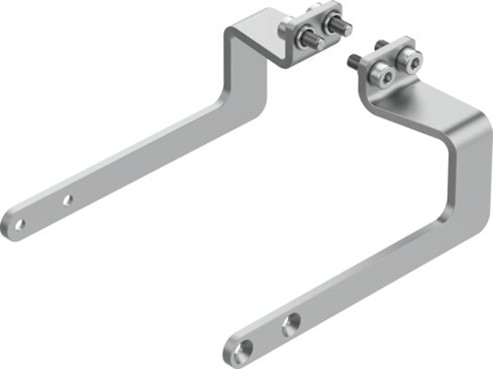


These solutions provide consistent gripping force and repeatable motion for fragile or precise parts, such as microtiter plates or other non-standard laboratory containers.
Integration with portal systems enables the creation of compact automation cells capable of processing, inspecting, and orienting samples within a single workflow.
 Rotary actuators, such as the Festo ERMO series, provide controlled and precise angular motion in automation tasks requiring repeatable rotation. As a compact electromechanical drive with integrated motor and gearbox, it can complement portal systems and gripper modules in laboratory equipment.
ERMO is suitable for applications requiring sample orientation, positioning, or rotation as part of processing sequences, such as cap removal and placement. Combined with other motion and gripping components, it helps simplify kinematics and create more compact, clearer automation workflows.
Precise liquid handling is essential in almost every laboratory automation application — from IVD diagnostics to pharmaceutical research. Inaccuracies in dosing or contamination between samples can affect analysis results and increase costs.
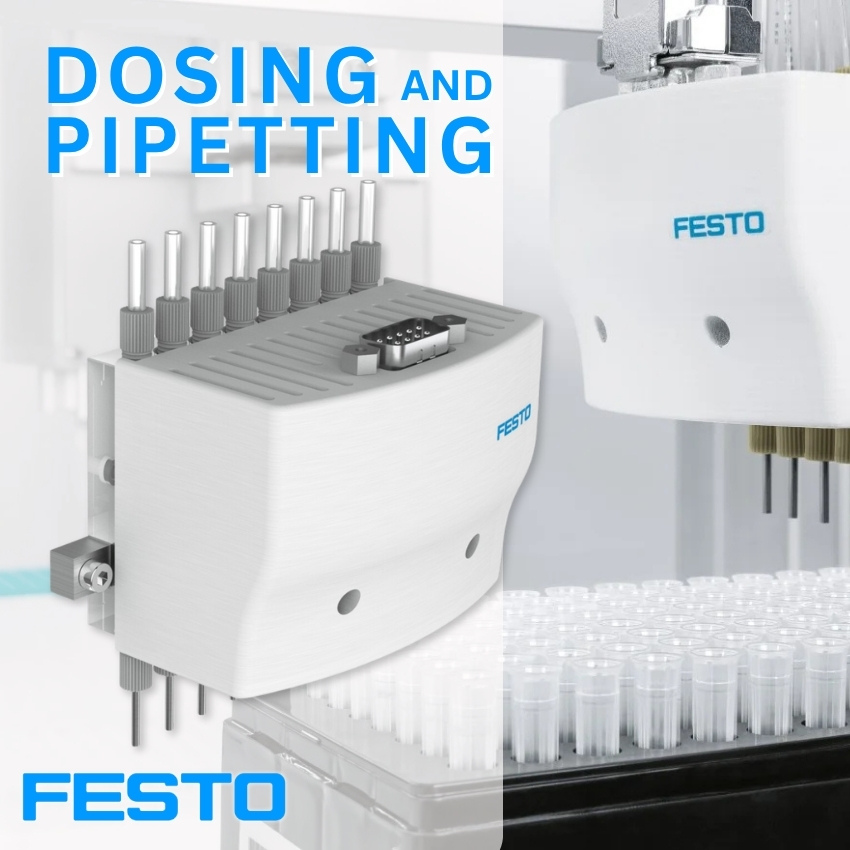
Festo offers integrated liquid handling solutions covering both dosing with dosing heads and open-loop pipetting systems.
This approach facilitates integration and helps avoid liquid contact with internal system parts, which is especially important when working with biological samples.

Accurate technical parameters, such as dosing volumes or pressure ranges, depend on the specific model and configuration, so they should be checked in datasheets or consulted with an engineer.
Point-of-care diagnostic devices impose high demands on compactness, reliability, and energy efficiency. Festo offers miniaturized components and integrated subsystems specifically developed for IVD equipment and lab-on-a-chip solutions.
 Several approaches are used to reduce system size while increasing reliability:
Such manifolds can incorporate hundreds of components under one article number, simplifying assembly and documentation.
The best components alone do not provide value if not properly integrated into a system. Festo plays a key role in engineering collaboration within laboratory automation — co-designing with customers from the concept stage to ensure the final solution meets specific technical requirements, available space, and budget.
Practical benefits for equipment manufacturers and system integrators:
Festo Technical Engineering Center (TEC) near Boston, USA, is a specialized life sciences research and development center with experts in gas and fluid control and sample processing. It is available to customers requiring in-depth engineering collaboration from the start of their projects.

From modular components to complete automation systems — the Festo LifeTech portfolio enables laboratory equipment manufacturers and system integrators to create solutions combining precision, compactness, and reliability.
Portal systems, rotary gripper modules, liquid dosing solutions, and integrated manifolds together form the technological foundation for next-generation laboratory automation — whether designing a compact benchtop analyzer or a high-throughput screening station.
If you are designing a laboratory automation system or want to identify which Festo solutions best fit your application, contact ZTF Lāsma specialists. Our engineers will help select the most suitable components, discuss integration possibilities, and find the optimal path from concept to finished system.