

 Facebook
 Google
 LinkedIn
https://lasma.eu/en/search/products
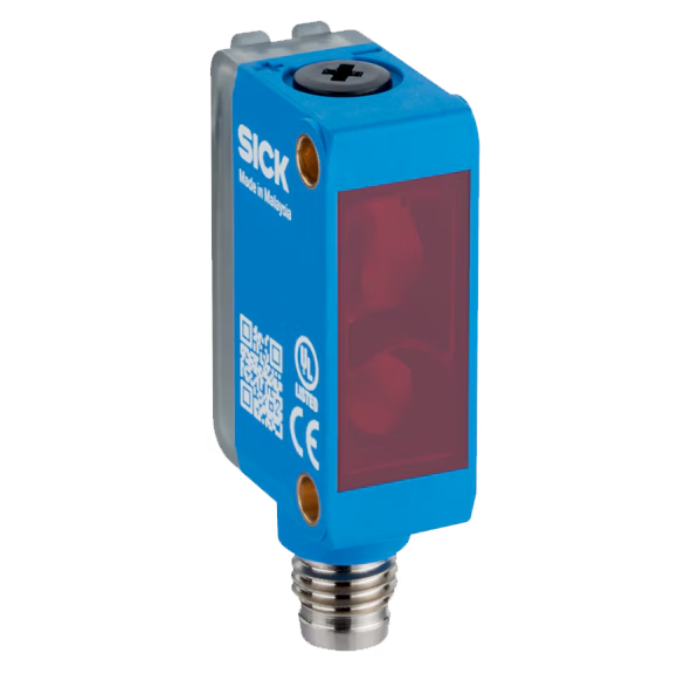
Detecting objects reliably on high-speed conveyor lines, packaging systems, or cleanroom environments demands sensors that perform without physical contact across varying object types and distances. Photoelectric proximity sensors use emitted light — infrared, red, or laser — to detect presence, position, or count without wear. Selection depends on operating mode, detection range, and target surface characteristics.
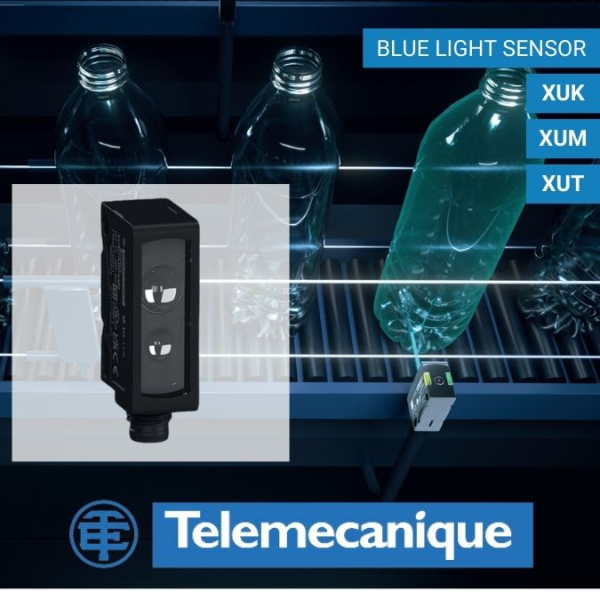
Photoelectric proximity sensors detect objects without physical contact by emitting a light beam and measuring changes in received light intensity. This category includes three principal operating modes: through-beam (separate emitter and receiver units), retro-reflective (emitter and receiver in one housing, reflector-assisted), and diffuse-reflective (emitter and receiver in one housing, object surface as reflector). Typical applications include object detection and counting on conveyor belts, presence/absence monitoring in packaging and bottling lines, positioning in automated assembly, and detection of transparent or colored materials such as PET bottles and films. Hygienic housing variants are available for food processing and cleanroom environments.
| Type | Typical Range | Mounting | Best For |
|---|---|---|---|
| Through-beam | Up to 60 m | Two-sided (emitter + receiver) | Long-range, high-speed, transparent objects |
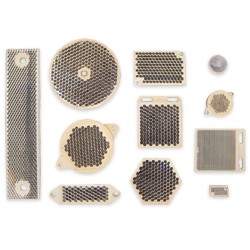
| Retro-reflective | Up to 15 m | One-sided + reflector | Mid-range, limited access installations |
| Diffuse-reflective | Up to 2 m | One-sided, no reflector | Short-range, compact installations |
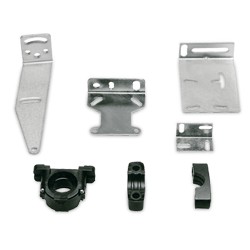
Photoelectric proximity sensors are available in standard cylindrical (M12, M18) and rectangular block housings with standardized mounting options across product families, simplifying replacement and system expansion. SICK sensors in this category are stocked for short lead times. For high-volume OEM requirements or application-specific configurations — including IO-Link variants or hygienic designs — contact our technical sales team for availability and volume pricing.
Through-beam sensors use a separate emitter and receiver aligned opposite each other; an object is detected when it interrupts the beam. Diffuse-reflective sensors house both emitter and receiver in one unit and detect light reflected back from the target object itself. Through-beam offers significantly longer detection ranges (up to 60 m) and is less affected by target surface properties, while diffuse sensors are easier to install but sensitive to surface reflectivity and color.
Standard diffuse-reflective sensors often fail on transparent targets because insufficient light is reflected back. Through-beam sensors are the preferred solution, as the transparent object still attenuates the beam enough to trigger detection. Specialized retro-reflective sensors with polarization filters can also be used, as transparent objects disrupt the polarized return signal even without fully blocking the beam.
Common causes include contamination on the lens, highly reflective or mirror-like target surfaces causing stray reflections, and strong ambient light interference. Preventive measures include selecting sensors with background suppression for diffuse mode, using laser or PinPoint LED sources for tighter beam geometry, installing protective covers or air purge fittings in dusty environments, and ensuring correct alignment in through-beam and retro-reflective setups.
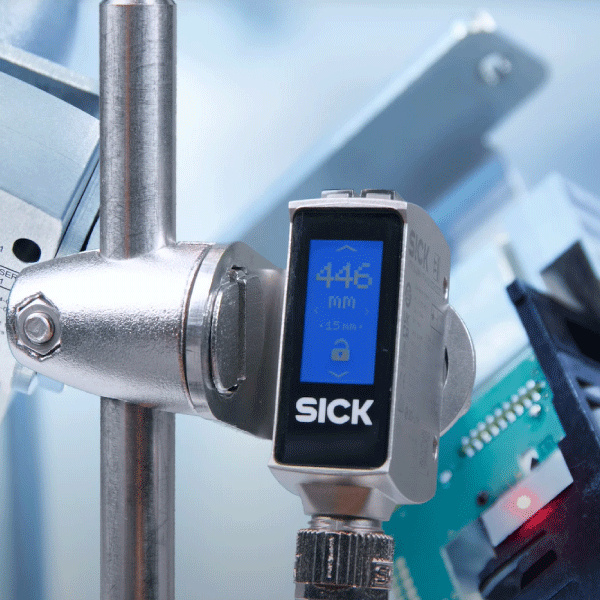
IO-Link enables bidirectional digital communication between the sensor and the controller, allowing real-time transmission of process values, diagnostic data (signal quality, contamination warnings, operating hours), and remote parameter adjustment without physical access to the sensor. This reduces commissioning time, supports predictive maintenance strategies, and allows a single sensor variant to be reconfigured for different detection tasks via the controller — eliminating the need for manual teach-in on the machine.