

 Facebook
 Google
 LinkedIn
https://lasma.eu/en/search/products

Level regulators are used across water treatment, chemical processing, food production, and HVAC applications to automate pump and valve control based on liquid level. Engineers select them to prevent dry-running pumps, overfill protection, and to maintain consistent process levels without manual intervention. This category covers both point-level switches and continuous level controllers from Schrack, Nivelco, and Elko EP.
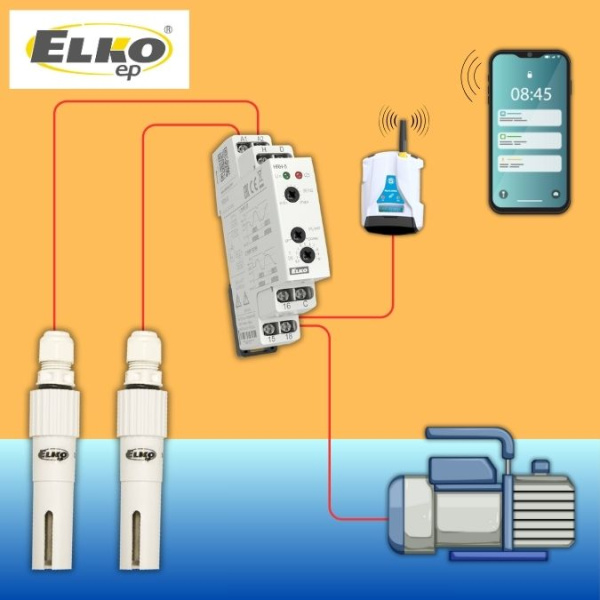
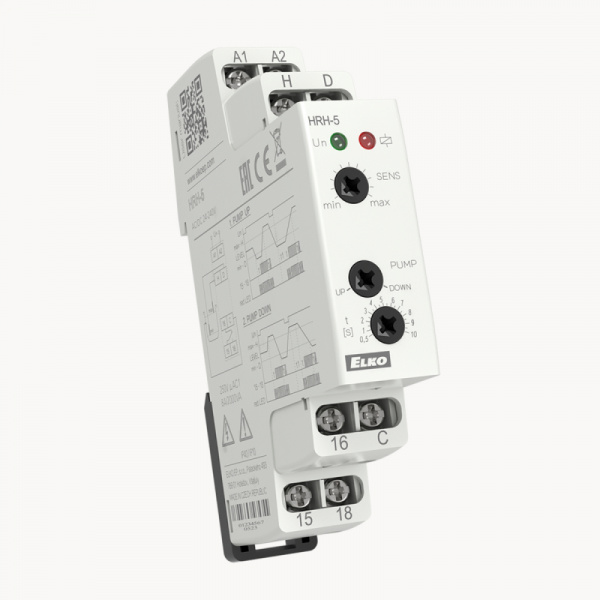
Level regulators combine a sensing element with a control output to automate liquid level management in tanks, sumps, and process vessels. This category primarily covers electrode-type level regulators (conductivity probe + relay unit), float-type switches, and electronic level controllers that accept probe or switch inputs and output relay contacts for pump or valve control. Products from Schrack, Nivelco, and Elko EP cover the most common industrial and building services applications.
Electrode relay units are the standard choice for conductive liquids such as water, wastewater, and mild chemical solutions. Float switches suit simple on/off level control in clean liquids. Electronic controllers add adjustable hysteresis, multiple setpoints, and relay outputs for direct pump start/stop automation.
| Type | Best for | Output | Typical use |
|---|---|---|---|
| Electrode relay unit | Conductive liquids | Relay | Pump station, water tank |
| Float switch | Clean liquids | Relay / switch contact | Sump, HVAC buffer tank |
| Electronic level controller | Multi-pump, adjustable setpoints | Multi-relay, 4–20 mA | Process tanks, dosing systems |
No. Electrode regulators require minimum liquid conductivity, typically above 10–50 µS/cm. Demineralised water falls below this threshold — use a float switch instead.
Adjust the controller's hysteresis or deadband setting to increase the gap between pump-on and pump-off electrode positions, reducing switching frequency.
A level switch only detects presence or absence at a fixed point. A level regulator includes the control relay or electronic unit that directly drives a pump or valve output.
Some electronic level controllers in this range support pump alternation and cascade control across multiple setpoints — check the specific model's relay configuration in the datasheet.