 Facebook
 Google
 LinkedIn
https://lasma.eu/en/search/products

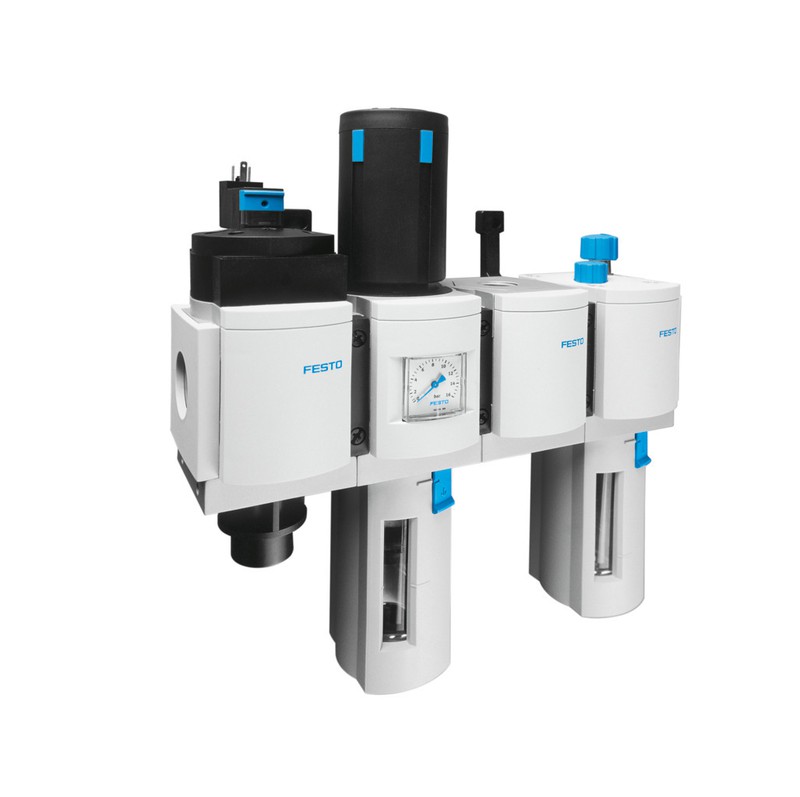
Compressed air preparation equipment conditions the air supply before it reaches pneumatic actuators, valves, and instrumentation. Used across factory automation, food processing, automotive assembly, and process industries, FRL units and associated components protect downstream equipment from contamination, pressure fluctuation, and moisture. Festo's MS series modular air prep is a common choice for machine builders requiring scalable, manifold-mounted solutions.
Compressed air preparation covers all equipment used to condition compressed air between the compressor and point-of-use pneumatic components. The core product is the FRL unit — a modular assembly combining a particulate filter, pressure regulator, and lubricator. Festo's MS series is widely used in modular machine builds, allowing individual units to be combined on a common rail with optional fieldbus pressure monitoring.
Beyond FRL assemblies, the category includes:
| Product | Primary function | Typical application |
|---|---|---|
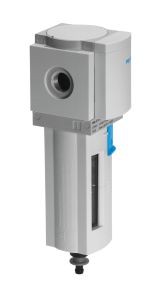
| Particulate filter | Remove solid particles | General factory automation |
| Coalescing filter | Remove oil aerosols and water mist | Instrument air, food processing |
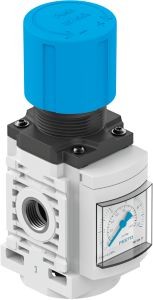
| Pressure regulator | Stabilise downstream pressure | All pneumatic circuits |
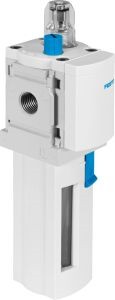
| Lubricator | Inject oil mist for lubrication | Pneumatic tools, older cylinders |
| Soft-start valve | Gradual pressurisation on startup | Machine safety circuits |
| Refrigerant dryer | Moisture removal to +3°C PDP | General factory air supply |
| Desiccant dryer | Moisture removal to −40°C PDP | Outdoor pipework, instrument air |
Most current Festo cylinders and valves are lubrication-free and should not be used with a lubricator, as oil mist damages PTFE seals. Always confirm with the component datasheet before adding a lubricator.
Match the FRL port size to the largest downstream connection in the circuit. Undersizing the port creates excessive pressure drop at peak flow, reducing actuator performance.
Use a soft-start valve when the downstream circuit contains actuators that could slam to end position on sudden pressurisation at machine startup. It gradually ramps pressure to prevent mechanical shock.
Timed drains open on a fixed interval and waste compressed air when no condensate is present. Zero-loss electronic drains only open when condensate is detected, reducing energy consumption.