

 Facebook
 Google
 LinkedIn
https://lasma.eu/en/search/products
Control and automation panels increasingly contain more electronics every day: frequency converters, PLC, power supplies, safety modules, communication equipment, measuring devices and industrial network components. Each of these elements dissipates heat during operation. If the heat is not removed, the temperature in the cabinet gradually rises, the components operate under greater thermal load, and the risk of operational interruption increases.
Very recently, Automation Day 3 took place, where a Rittal representative shared insights on thermal management of control cabinets. This topic is highly relevant because in an industrial environment control panels are often located not in ideal laboratory conditions, but in production — next to lines, dust, humidity, changing temperatures, and sometimes also under restricted ventilation conditions.
The simple answer — so that the components inside do not overheat and can continue to operate reliably. Excessively high temperature affects electronics much more directly than it sometimes seems. Components may not fail immediately, but their service life is reduced. Irregular errors, power supply overloads, frequency converter trips, communication losses or PLC malfunctions appear.
Why does the panel need cooling? So that the components inside do not overheat and can continue to operate reliably.
A good practical guideline is the principle used when assessing electronics aging: when the temperature rises by about 10 °C, component service life may be reduced by half, while failure frequency may double. This should not be taken as an exact calculation for every case, but as a clear engineering reminder — temperature margin in the panel is not a formality.
If cooling is not properly considered, the consequences usually appear in operation. The equipment starts stopping on hotter days, frequency converters operate with errors, automation components age faster, maintenance becomes more frequent, and production downtime becomes more expensive. A properly selected cooling solution helps reduce thermal load, extend service life, and keep the panel in a more stable operating mode.
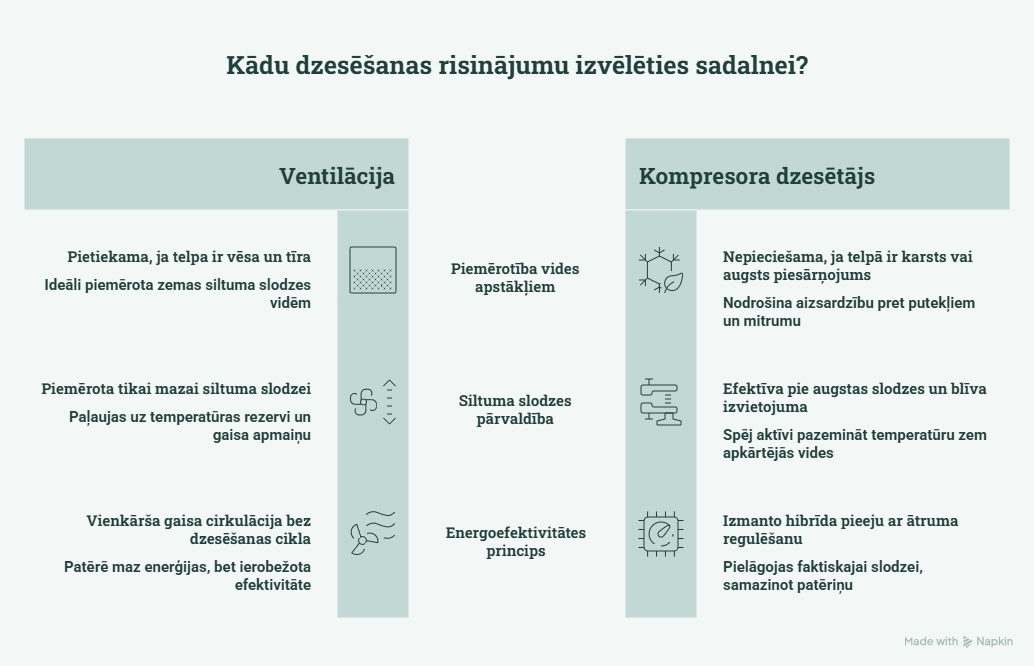
Control cabinet thermal management solutions can be divided into several groups. In practice, the choice starts with a simple question — can heat be removed with ambient air, or is actively cooled air needed?
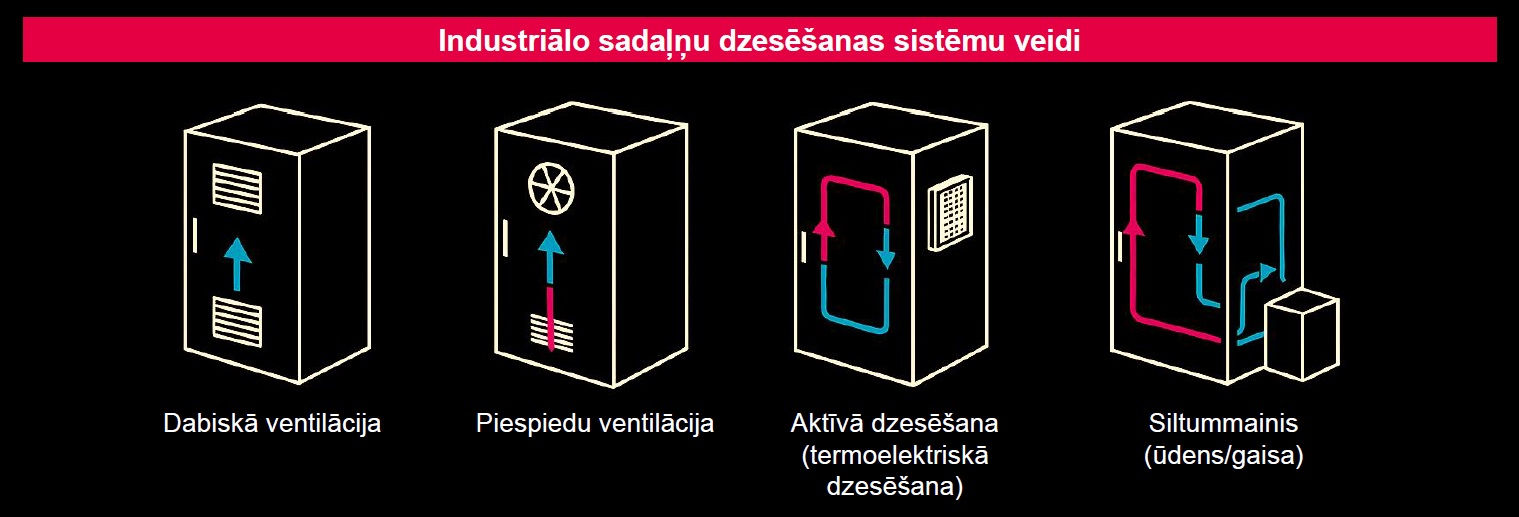
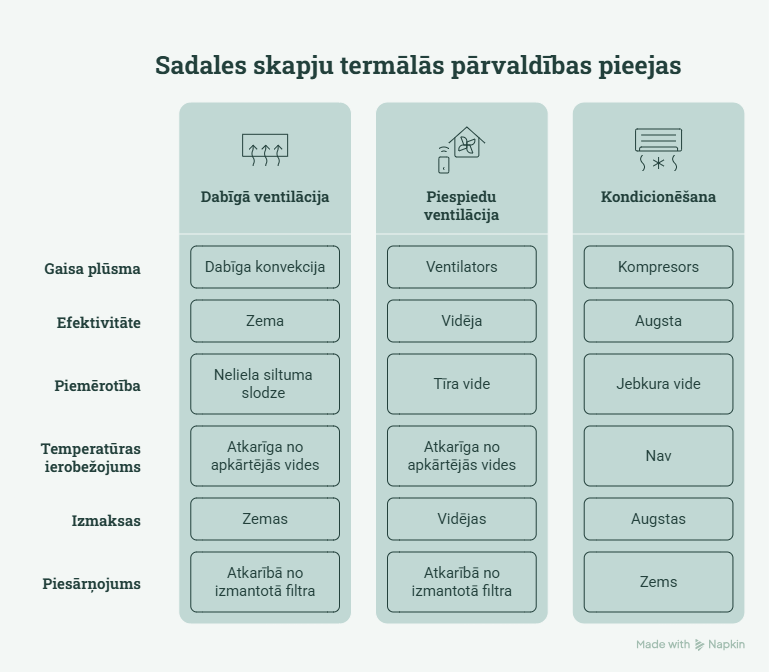
The simplest solution is natural ventilation. In this case, ventilation openings are provided in the panel. Cooler air enters from below, warms up and exits through the upper part. This approach may be sufficient for a small heat load and a clean environment where the ambient temperature is stable and sufficiently low. However, natural ventilation is not suitable for all cases. It depends on the temperature difference, the enclosure location and air movement in the room.
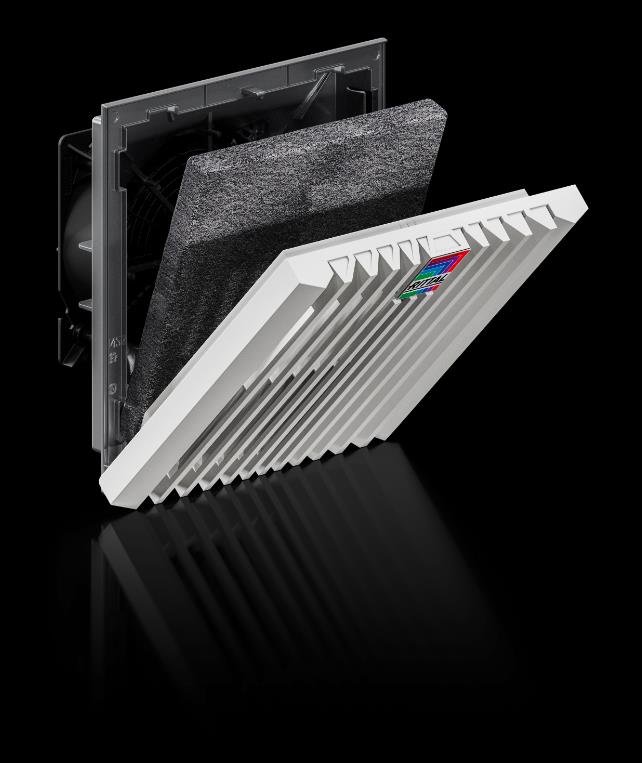
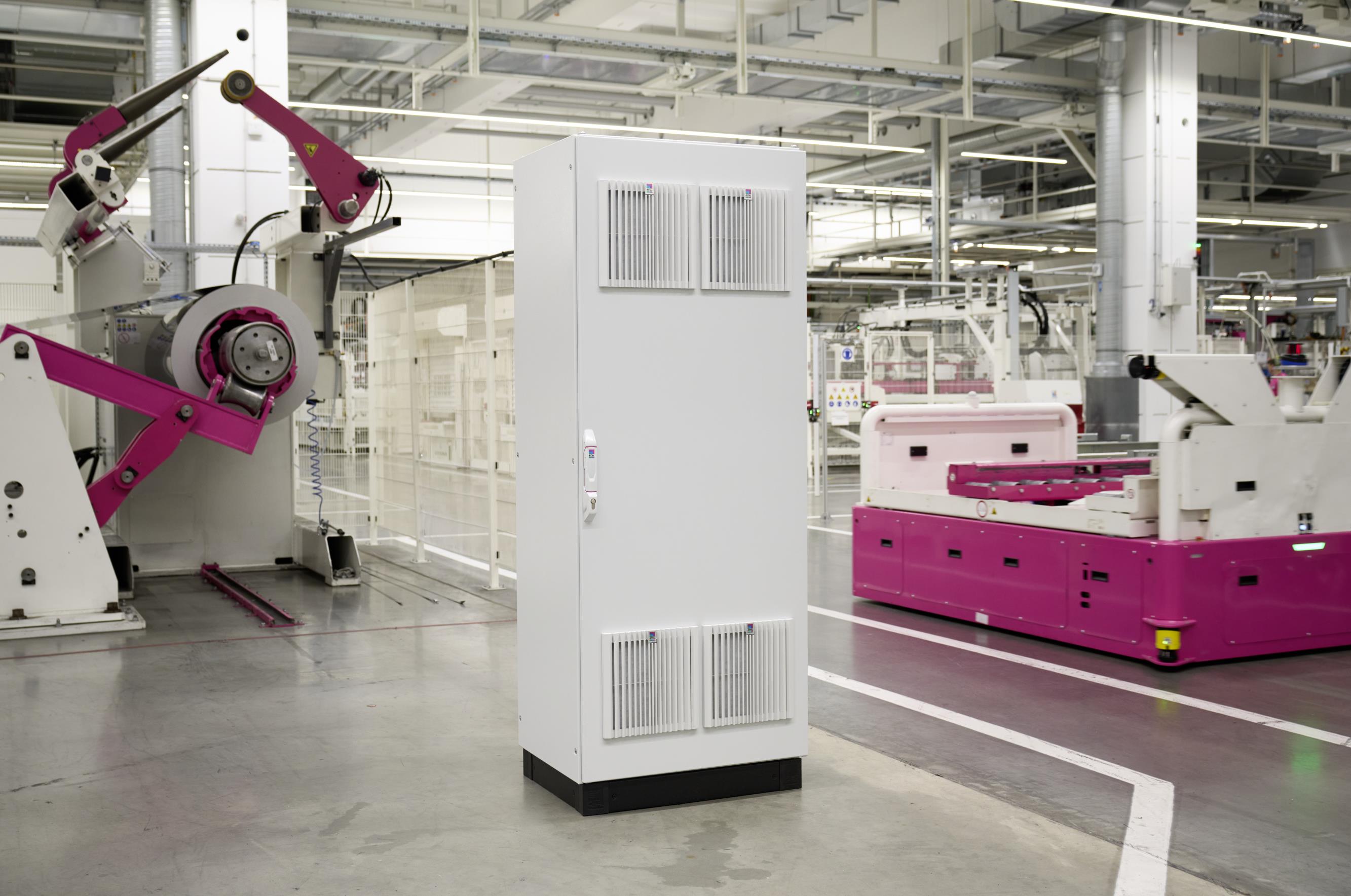
The next step is forced ventilation. Here the airflow is created by a fan, usually together with a filter. This allows cooler air to be introduced into the panel more effectively and warm air to be expelled outside. Forced ventilation is a technically simple and economically understandable solution if the room air is sufficiently clean and cooler than the desired temperature in the cabinet.
If the production room is already hot, ventilation alone will not cool the panel.
However, there is one significant limitation — ventilation cannot cool the panel below ambient temperature. If the production room is already +35 °C or more in summer, the fan will only move hot air. In such a situation, it is often impossible to do without active cooling.
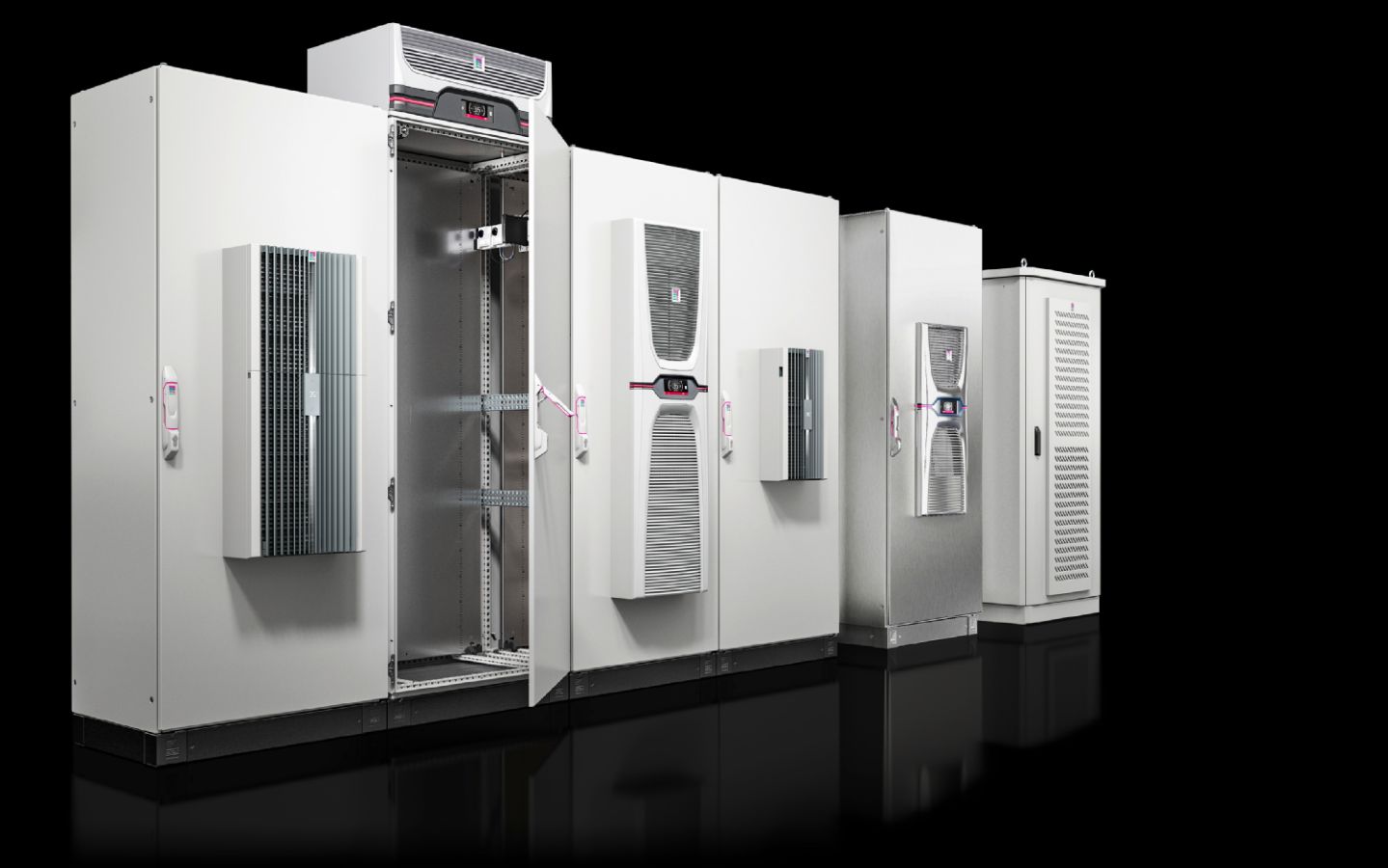
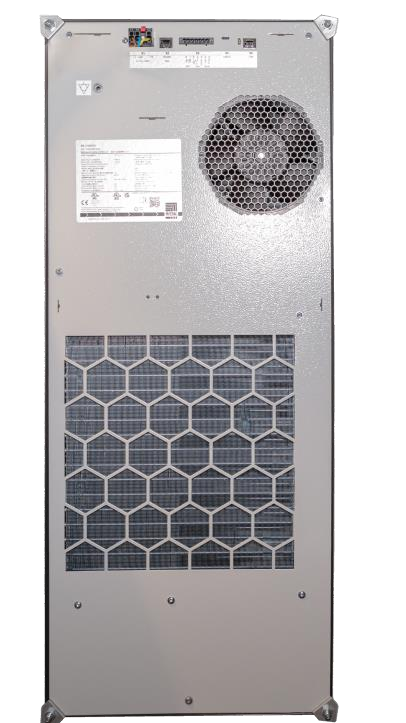
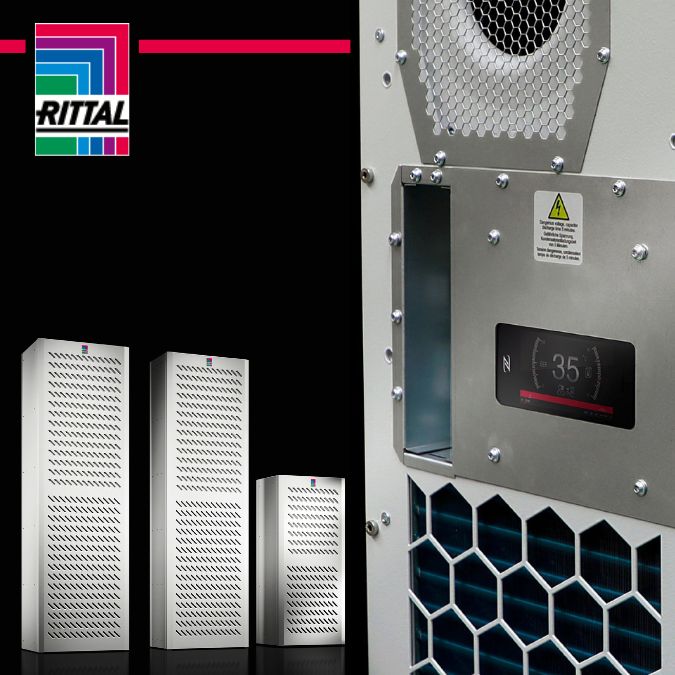
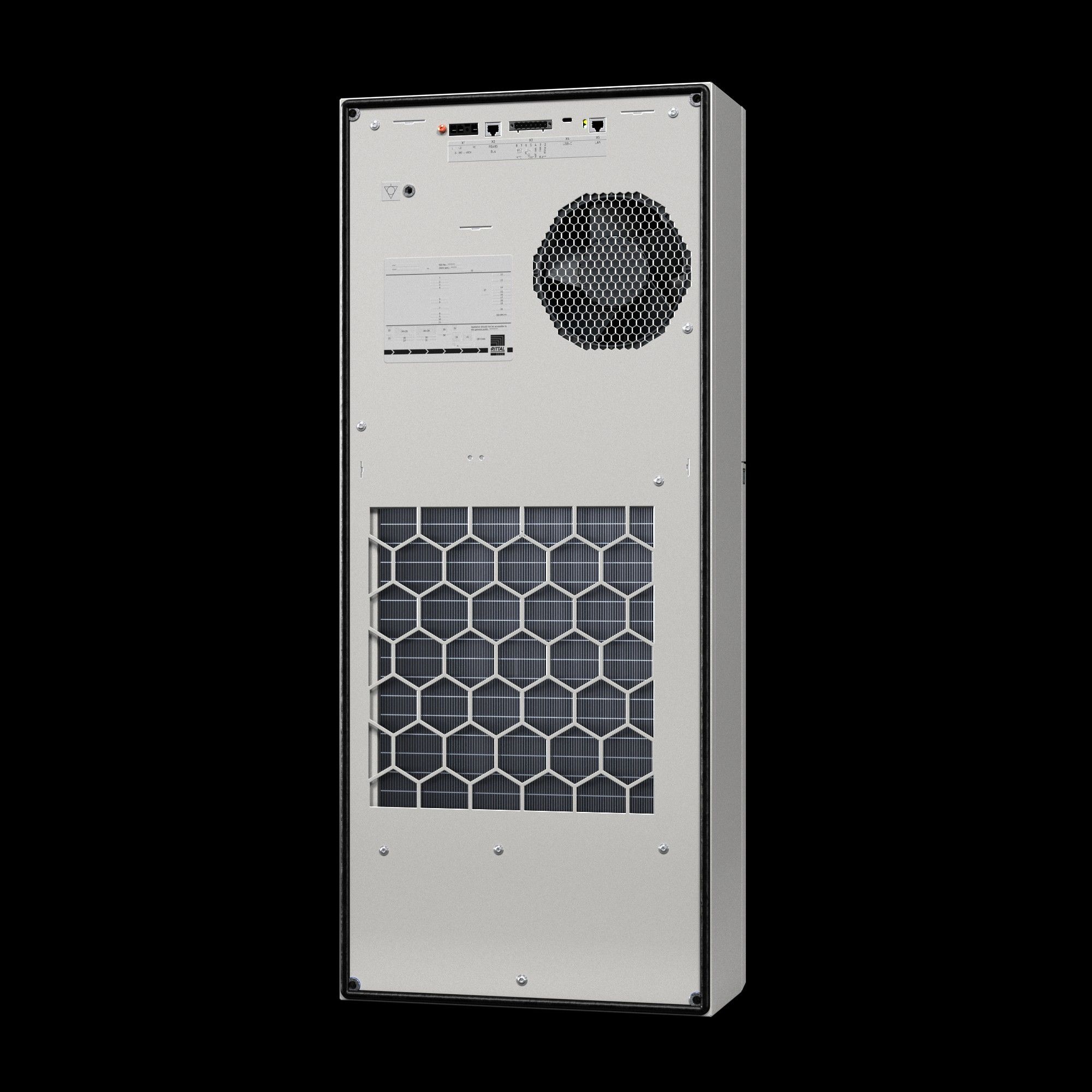
Cooling, i.e. compressor-type cooling units provide cooled air in the internal circuit of the panel. This means that the temperature in the cabinet can be maintained at a controlled level even when the ambient environment is warm. In Rittal cooling units, an important advantage is separate air circuits — the internal air circulates in the cabinet, while the external air does not contaminate the inside of the panel. This is especially important in dusty, humid or technologically demanding environments.
In addition to these basic approaches, there are also other solutions, such as air-air heat exchangers, air-water heat exchangers, thermoelectric cooling for smaller enclosures and industrial chillers for larger systems. However, in most practical projects the initial choice is precisely between ventilation and active cooling.
One of the most common risks in a production environment is the desire to “just open the cabinet” so that it does not overheat. In the short term this may seem like a solution, but in the long term it usually creates new problems. An open or poorly sealed panel allows dust, moisture, metal particles, wood dust, oil mist or other contaminants to enter the cabinet.
An open panel is not a cooling solution.
An open panel is not a cooling solution. It reduces overheating symptoms in the short term, but increases the risk of contamination, corrosion and component damage in the long term.
These contaminants settle on the components, worsen heat dissipation, can promote corrosion and increase the risk of damage. Therefore, a properly selected cooler is not only a “cold air source”. It helps keep the panel sealed, control the internal environment and reduce the ingress of contaminated air to the automation components.
In Baltic industry this is a very practical issue. In woodworking the problem is dust. In metalworking — metal particles and oil aerosols. In the food industry — humidity, washing processes and hygiene requirements. In logistics and energy — changing temperature, outdoor enclosures and condensation risk. In such conditions, panel climate control must be assessed together with IP protection, enclosure material, filter maintenance and the surrounding environment.
If the cabinet has a small heat load, but the room is cool and clean, natural or forced ventilation is often sufficient. This is a sensible solution if the temperature margin is sufficient and there are no high requirements for a sealed internal circuit.
If the cabinet has frequency converters, several power supplies, densely arranged components or the production operates in a warm environment, active cooling should be considered. The same applies when the panel must remain sealed and ingress of dust or moisture cannot be allowed.
If the room is already hot, the fan does not solve the basic problem. It only changes the air, but cannot lower the temperature in the cabinet below ambient temperature.
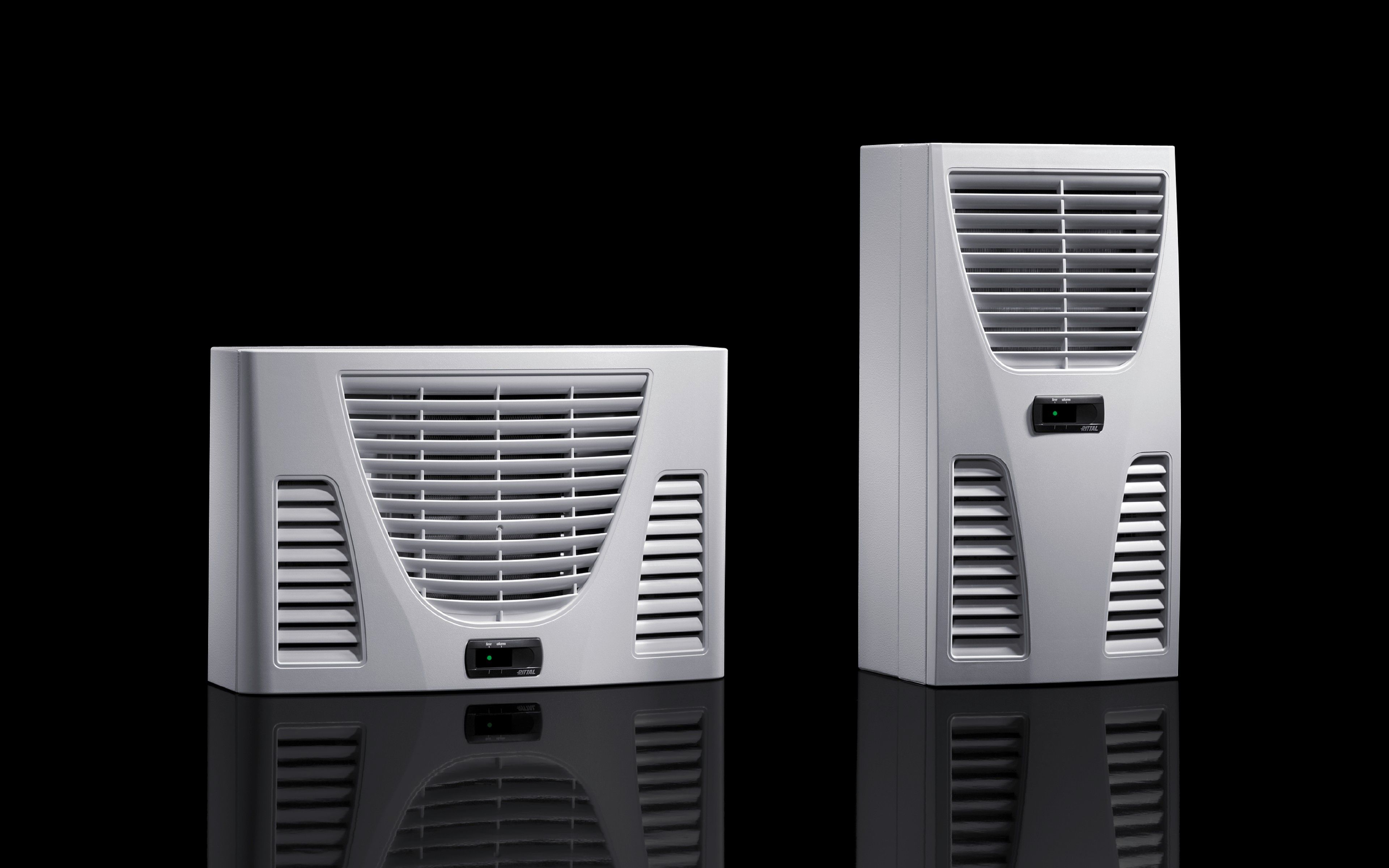
In such cases Rittal compressor-type cooling units are a technically justified solution. They allow controlled temperature to be maintained in the internal circuit of the panel even when the ambient environment is warm.
In the Rittal Blue e+ series a hybrid approach is used, where passive heat transfer is combined with active compressor cooling. Rittal states that Blue e+ solutions use heat pipe technology and speed-controlled components, which makes it possible to reduce energy consumption compared to more traditional solutions.
This principle is practically useful because the cooling unit adapts to the actual heat load instead of operating only in a simple on/off mode.
When choosing a new compressor-type cooling unit, you must currently also take into account the European Union F-gas regulation. This concerns the use of fluorinated gases and gradually restricts refrigerants with a high global warming potential, or GWP. In practice, this means that new cooling units must be assessed not only by cooling capacity, size and mounting type, but also by the refrigerant used.
Rittal has already incorporated this direction into its products. The Blue e+ series is adapted for operation with the low-GWP refrigerant R-1234yfwhich meets future sustainability and regulatory requirements. For industrial customers in Latvia and the Baltics, this is important at the time of purchase, because a cooling unit is usually bought for a longer service period, not just for a few years.
Therefore, when planning a new panel or modernizing an existing panel, the refrigerant is already part of the technical decision. This does not automatically make existing units unsuitable — they continue to operate according to the operating and service conditions. However, for a new purchase it is sensible to choose a solution that meets not only today’s needs, but also future requirements for placing new equipment on the market.
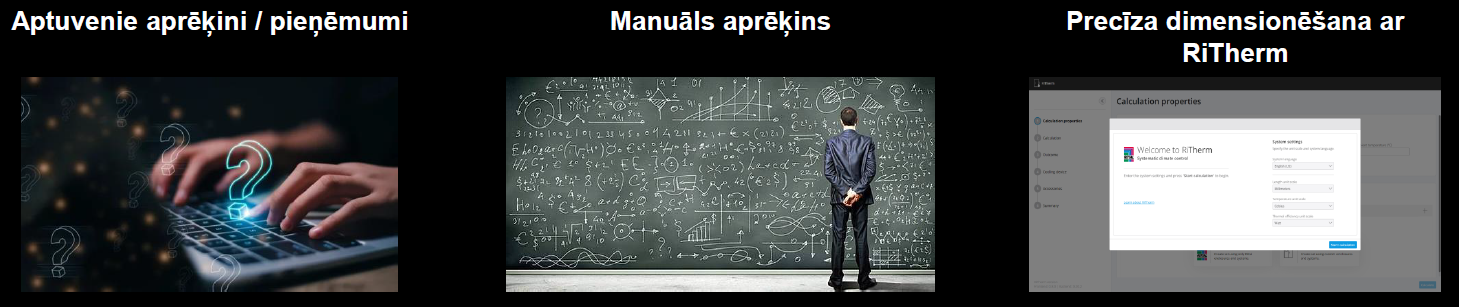
To choose a suitable cooling solution, first you need to know the heat dissipation in the cabinet, ambient temperature, cabinet dimensions, installation location and environmental conditions. Without these data, cooler selection becomes an approximate guess.
For this purpose, Rittal has developed the RiTherm calculation tool, which helps initially determine the required climate control solution. The Rittal RiTherm control cabinet cooling calculator helps choose a needs-based and energy-efficient solution, taking into account ambient conditions, energy efficiency and F-gas/GWP information.
This does not mean that the calculator replaces engineering verification. In practical projects, correct data input and on-site assessment are important. If component heat losses, ambient temperature or environmental contamination are assessed incorrectly, the calculation result will not be sufficiently reliable either. However, as a starting point RiTherm is very useful — it helps start the discussion with numbers, not feelings.
Control cabinet cooling is not an additional accessory at the end of a project, but part of safe operation. A properly selected solution reduces the thermal load on components, helps avoid unplanned downtime and allows the panel to operate in a more predictable mode.
ZTF Lāsma helps assess the real conditions on site and select a technically justified solution — from ventilation to Rittal active cooling units.
See Rittal control cabinet coolers in the ZTF Lāsma product catalog
compare options on the Rittal cooling unit manufacturer page
perform an initial calculation with the Rittal RiTherm cooling capacity calculator.