

 Facebook
 Google
 LinkedIn
https://lasma.eu/en/search/products
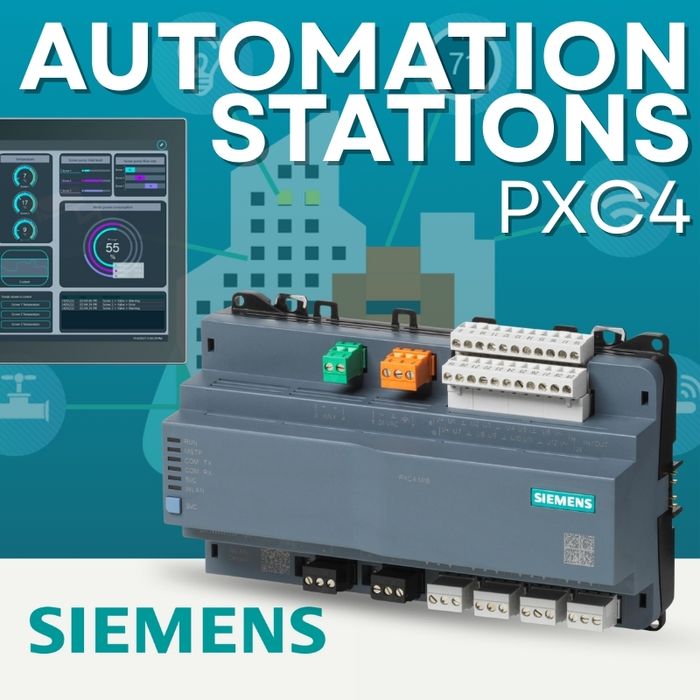
In today’s world, increasingly dominated by smart, sustainable and energy-efficient buildings, automation is no longer a luxury – it has already become a necessity. Siemens - a global technology leader, provides this intelligence with its modern building management systems (BMS). At the heart of these systems you will find the Siemens PXC4 automation station – a powerful and reliable controller designed for the control and optimization of building engineering systems.
Siemens is a globally recognized engineering and technology company with highly regarded expertise in electrification, automation and digitalization. In the building technologies sector, Siemens is known for intelligent solutions that improve energy efficiency, user comfort, safety and operational transparency.
A Building Management System (BMS – Building Management System) is a centralized platform that monitors, controls and optimizes a building’s mechanical and electrical systems, such as:
heating, ventilation and air conditioning (HVAC)
lighting control
energy consumption monitoring and optimization (typically via meters and data trends)
fire and life safety system integration
security and access control integration
A BMS ensures that all building systems operate in concert, efficiently and automatically, reducing manual intervention and operating costs. Siemens building automation platforms are widely used in commercial, industrial, healthcare and infrastructure buildings worldwide, providing transparent control over building processes.
Building automation is the use of intelligent hardware and software solutions to automatically control building systems based on real-time data, schedules and user-defined control strategies. Sensors collect data such as temperature, humidity, occupancy and air quality, while controllers analyze this data and execute control logic to ensure optimal building performance.
At the core of this automation architecture are automation stations such as the Siemens PXC4.
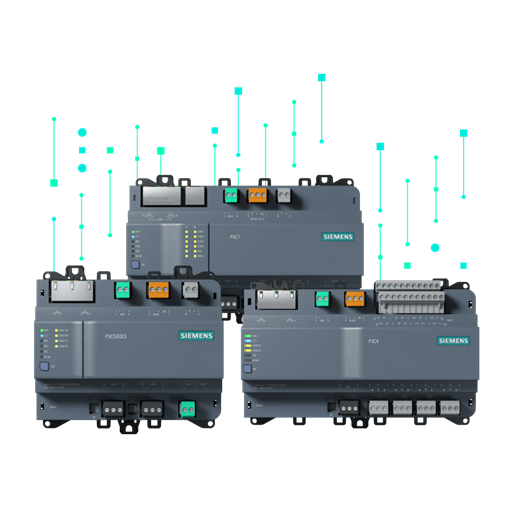
The Siemens PXC4 automation station is a high-performance, freely programmable controller designed for BMS solutions. It acts as the “brain” of the building automation system.
Main functions of the PXC4 automation station:
PXC4 is designed with a focus on reliability, scalability and flexibility, making it suitable for both small systems and complex, large buildings.
Key parameters:
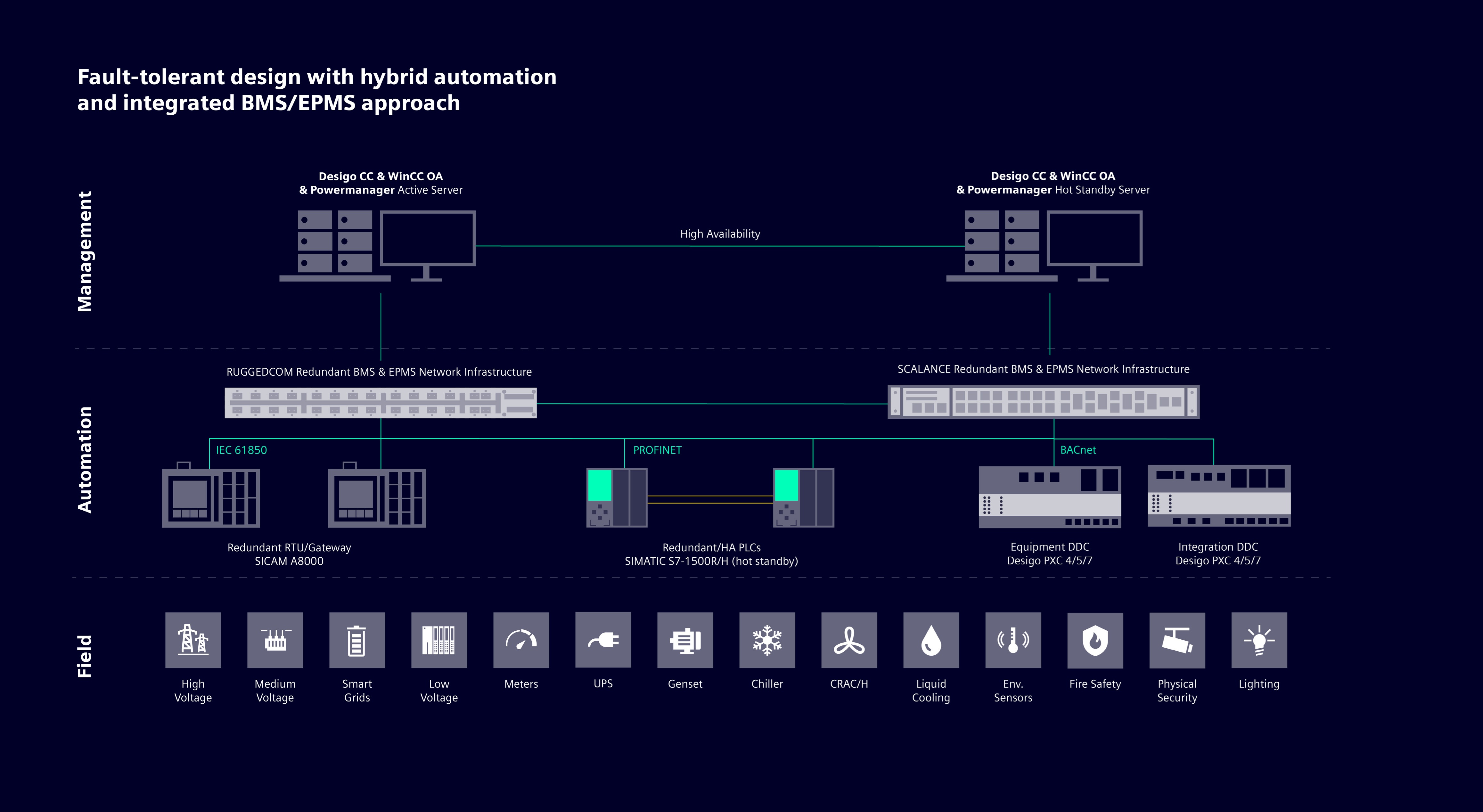
The table below briefly compares Siemens PXC4.E16-2 and PXC4.M16-2 by the most important criteria. It helps to quickly understand which option best fits a specific building automation architecture and operational needs.
| Criterion | PXC4.E16-2 | PXC4.M16-2 |
|---|---|---|
| Primary application | Control of primary equipment/nodes (HVAC) with an Ethernet backbone | Control of primary equipment/nodes (HVAC) with an RS485 (MS/TP) backbone |
| BACnet communication | BACnet/IP + BACnet/SC (BTL certified) | BACnet MS/TP (BTL certified) |
| IT security | HTTPS, IEC-62443-4-2 (SL2), BACnet Secure Connect | HTTPS, IEC-62443-4-2 (SL2) |
| Ethernet | 2× RJ45, 10/100 Mbps + 2-port Ethernet switch | None (MS/TP variant) |
| WLAN | Yes (engineering/commissioning) | Yes (engineering/commissioning) |
| Modbus integration | Modbus RTU and/or Modbus TCP (integration data points) | Modbus RTU |
| RS485 for field integration | 1× RS485 (Modbus RTU or M-bus level-converter) | 1× RS485 (Modbus RTU) + M-bus via level-converter |
| M-bus meters | Via RS485 level-converter; max. up to 250 (limit related to data points/objects) | Via RS485 level-converter; max. up to 250 (limit related to data points/objects) |
| Onboard I/O | 16 (12 UIO + 4 relays) | 16 (12 UIO + 4 relays) |
| I/O expansion | With TXM modules: up to 50 I/O (onboard + TXM) | With TXM modules: up to 50 I/O (onboard + TXM) |
| Integration data points | (M-bus + Modbus TCP + Modbus RTU) up to 40 | (Modbus RTU) up to 40 |
| KNX PL-Link devices | Up to 64 | Up to 64 |
| Building X connectivity | Supported (cloud connectivity) | Supported (cloud connectivity) |
| Power supply | AC 24 V or DC 24 V | AC 24 V or DC 24 V |
| Mounting | DIN rail or screw mounting | DIN rail or screw mounting |
 The PXC4 automation station provides building automation using a structured control process:
The PXC4-2 series also provides system functions such as alarming, scheduling, trending and user profiles
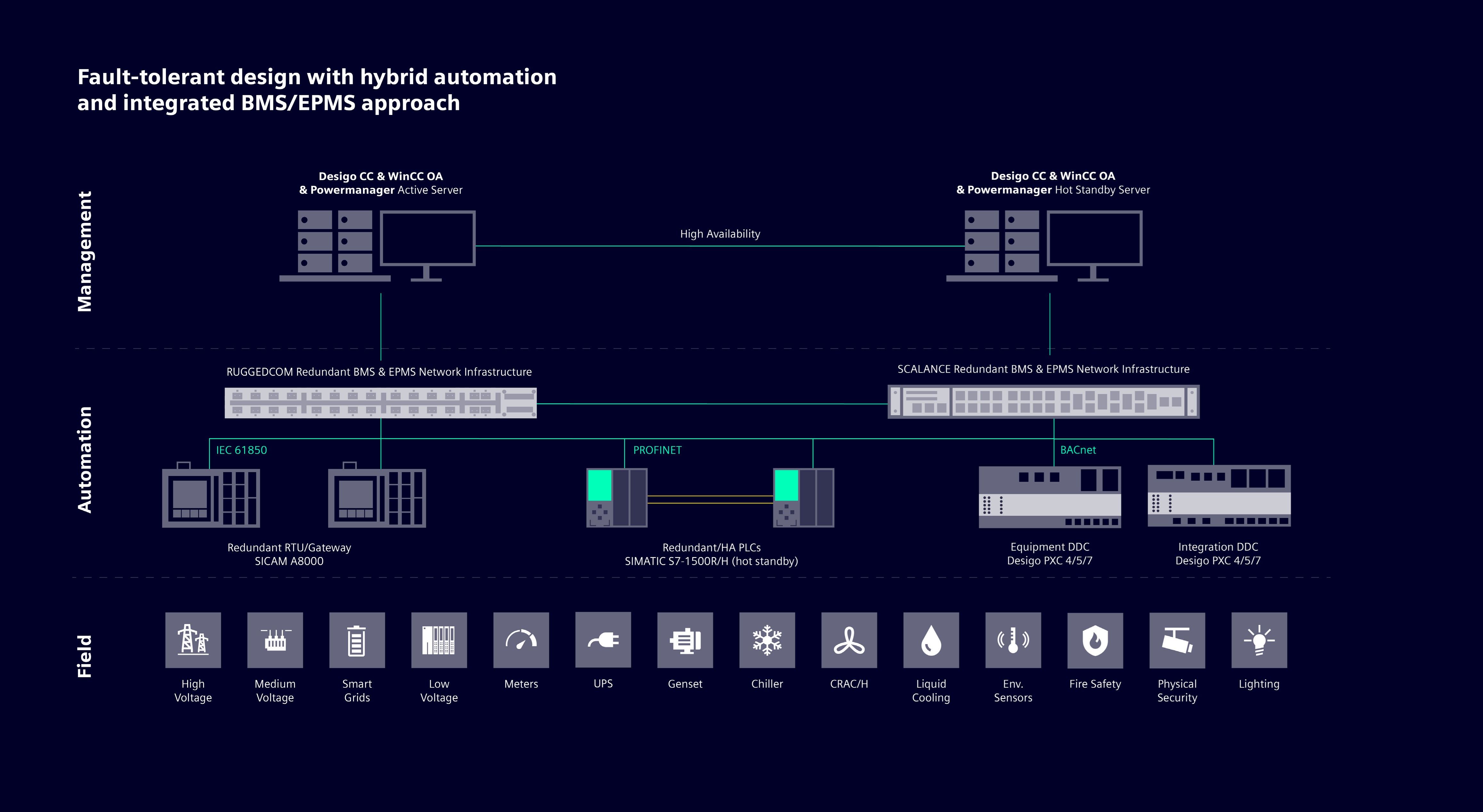
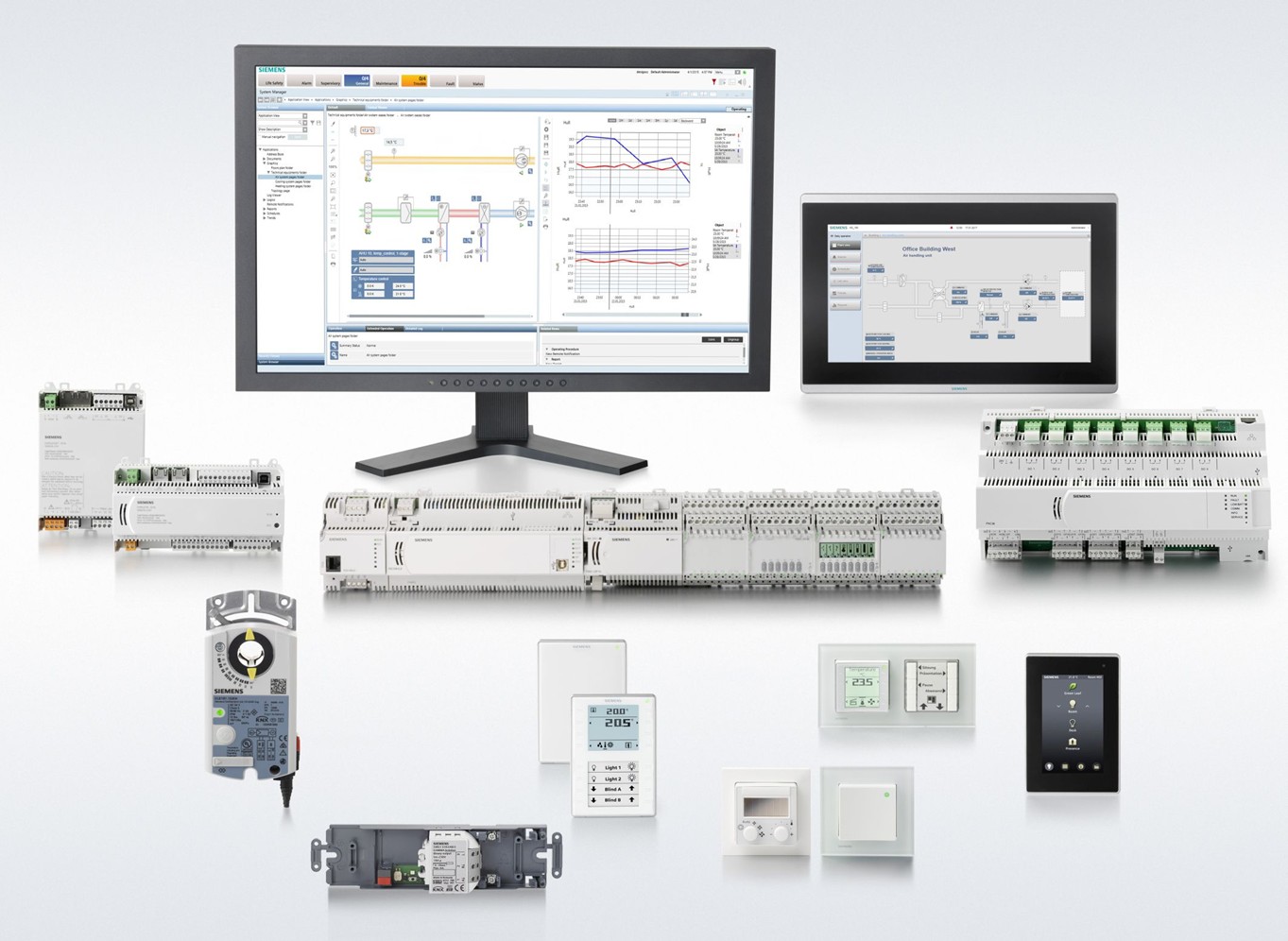
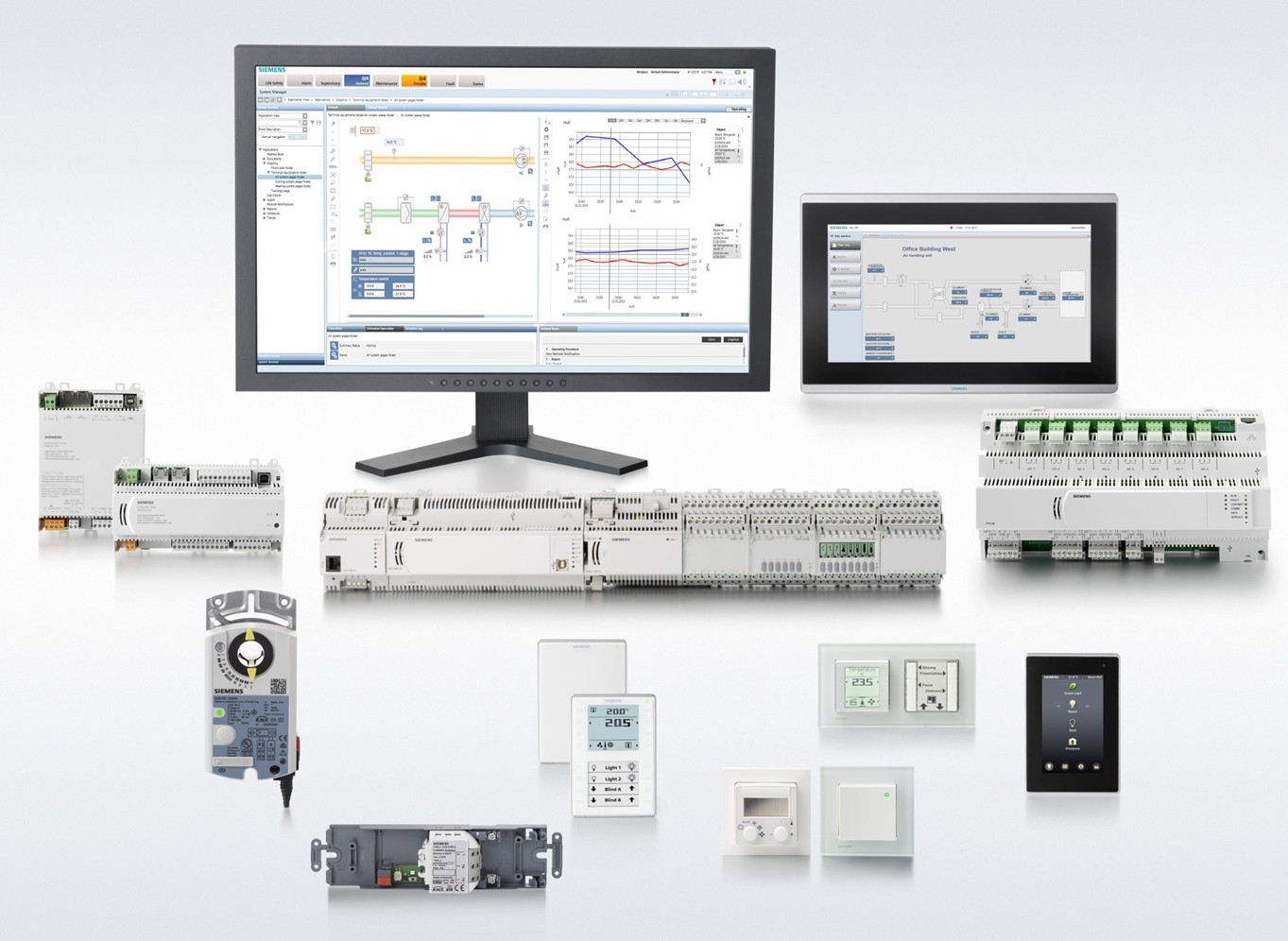
A typical Siemens building automation network structure consists of three main levels:
Device level
Automation level
Management / supervisory level
All levels are connected in a secure communication network, ensuring continuous data exchange and coordinated control of the building systems.
 Modern buildings face ever higher requirements for energy efficiency, sustainability, comfort and regulatory compliance. Manual system control is inefficient, error-prone and also costly in the long term.
Building automation is necessary to:
Implementing Siemens building automation solutions with PXC4 automation stations delivers significant benefits:
Energy efficiency
Optimized HVAC and lighting control reduces energy consumption.
Reduced operating costs
Lower utility bills and reduced maintenance costs.
Improved user comfort
More stable temperature, humidity and air quality.
High system reliability
Automated control reduces the risk of human error.
Scalability and future readiness
Easier integration of new systems (BACnet, Modbus; depending on the model).
Data analysis and decision-making
Access to real-time data, trends and analytics (trends, reports).
The Siemens BMS PXC4 automation station is an essential component in creating intelligent, efficient and future-ready buildings. Combining Siemens engineering expertise with modern building automation, PXC4 helps building owners and operators reduce costs, improve comfort and achieve sustainability goals. It is not just a control device – it is the foundation of a smart building ecosystem.