

 Facebook
 Google
 LinkedIn
https://lasma.eu/en/search/products
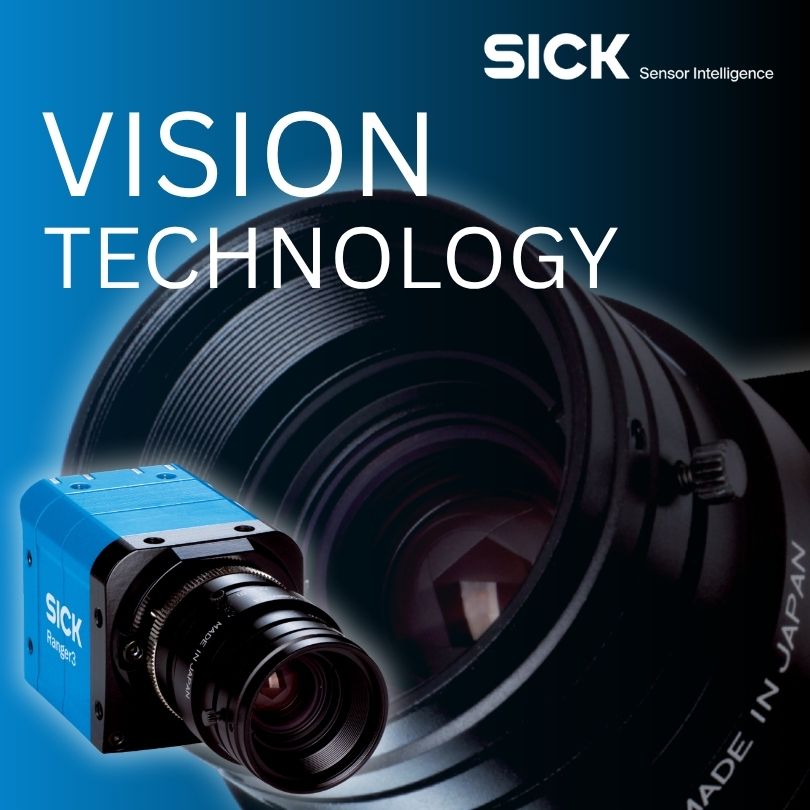
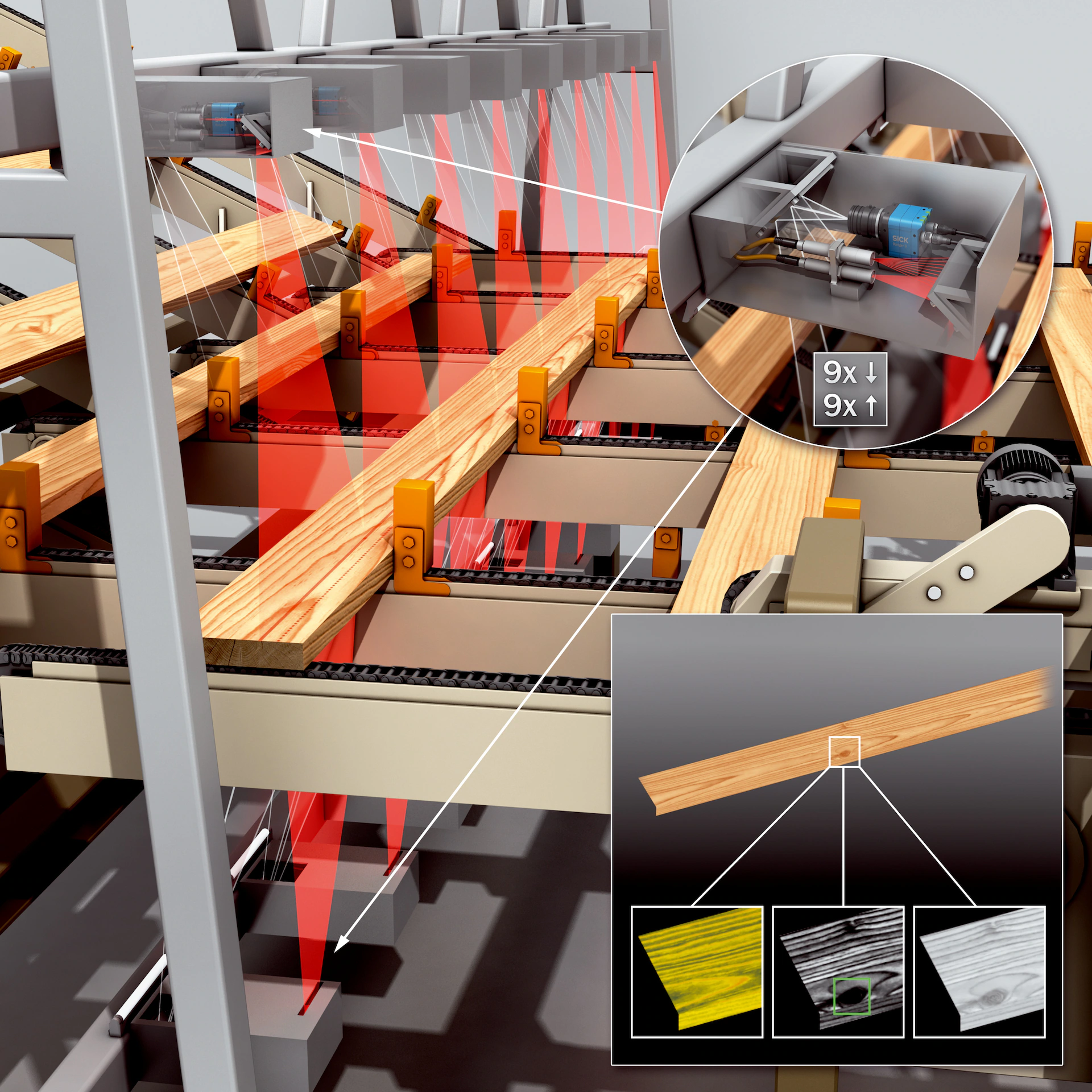
Machine vision is an automation technology that allows machines to "see" and analyze visual information, performing quality control, measurement, and identification tasks. SICK is one of the leading manufacturers of sensors and machine vision systems with over 60 years of experience. SICK offers a very wide range of 2D and 3D vision cameras for industrial automation.
Machine vision is a technology that uses cameras, sensors, and computer vision algorithms to automatically inspect, analyze, and make decisions based on visual data. It is similar to human vision but operates with much greater precision, speed, and consistency. The system captures images, processes them with special algorithms, and makes decisions — for example, whether a product is of high quality or defective.

SICK offers several camera series for different applications:
 Inspector83x series — AI-powered camera with deep learning capabilities that allows unskilled operators to quickly configure quality control, defect detection, and sorting by simply "teaching" the camera with examples. Capable of up to 15 inspections per second.
 Ranger3 series — high-performance 3D streaming cameras with up to 69 kHz profile acquisition speed, RGB color scanning up to 5120 pixels, and ROCC technology for outstanding 3D quality. Suitable for industrial inspection and measurement.
The table shows some of the most popular SICK cameras.
Camera / Series | Type | Main application | Typical task | Highly suited for industries | Strength |
|---|---|---|---|---|---|
InspectorP61x | 2D | Simple visual inspection | Presence / orientation | FMCG, electronics, packaging | Very compact, fast integration |
InspectorP64x | 2D | More precise measurements and positioning | Contour measurement, label QC | Automotive, metalworking, assembly | Large FOV + programmable logic |
Inspector83x | 2D + AI | Complex defect detection | Variable/irregular defects | Automotive, plastics, electronics | Deep learning, “teach by example” |
Ranger3 | 3D (streaming) | Very high-precision profiling | Shape, relief, deviations | Automotive, metal, casting | High speed + high 3D quality |
Ruler3000 | 3D (line scan) | Dark/absorbing materials | Tire and rubber inspection | Automotive, rubber, plastics | Superfast + sensitive to dark materials |
Visionary-T/S/B | 3D (snapshot) | Space and object perception | Safety, obstacle detection | Logistics, robotics, AGV | 3D in a single frame (not in motion) |
TriSpectorP1000 / ScanningRuler | 3D (triangulation) | Inline volume measurement | Curvature/accuracy/assembly | Food, FMCG, metalworking | Programmable 3D analysis without PC |
Machine vision systems perform four basic tasks: 
Simple examples:
 Presence check — whether all components are installed on the circuit board or included in the packaging.
Complex examples:
 AI-supported defect detection — detection of unpredictable defects with deep learning algorithms that can adapt to new types of defects.
* AI - Artificial Intelligence
* ML - Machine Learning
Machine vision systems are crucial in quality control:
Defect detection:Systems identify cracks, scratches, dents, color inconsistencies, missing parts, or incorrect assembly with more than 99% accuracy. AI systems such asInspector83xuse convolutional neural networks (CNNs) that analyze images pixel by pixel and classify defects by severity. Traditional methods compare images to a reference, but AI models can learn and adapt to even unforeseen defects.
Quality inspection:Cameras check label accuracy, seal integrity, barcode presence, and print quality. In the pharmaceutical industry, systems inspect tablet blister packs, confirming batch codes and completeness, processing hundreds of packages per minute.
Sorting by various criteria:
|
|
|
The principle of machine vision is identical to that used in automatic number plate recognition (ANPR/LPR) and pedestrian detection on streets.
 Uses optical character recognition (OCR) algorithms that identify and read letters and numbers on vehicle license plates in images. Modern deep learning-based systems can read them at various angles, in poor lighting conditions, and even damaged plates with more than 98% accuracy. They utilize similar CNN algorithms as industrial machine vision systems.
Uses computer vision algorithms to identify and track pedestrians in images or video streams. The systems analyze human shape, movement, and behavior using deep learning models. This is critical for autonomous vehicles (collision avoidance), security monitoring, and smart city infrastructure.
 All these systems — whether SICK industrial cameras, LPR systems, or pedestrian detectors — use a similar technological foundation:
Traditional machine vision
The engineer manually defines which features to look for (edges, colors, textures), and creates rules. This approach is simple, fast, and interpretable, but requires a lot of manual work and is less flexible for complex tasks.
Deep learning approach
The AI model automatically "learns" what to look for by analyzing example images ("end-to-end learning"). This requires larger amounts of data and computational resources, but achieves better results for complex tasks and can adapt to new problems. SICK Inspector83x cameras use exactly this approach—the operator simply shows the camera good and bad examples, and the camera learns to distinguish them on its own.
Machine vision systems provide significant return on investment:

The development of machine vision continues with several key trends:
Machine vision technology has become indispensable in modern automation — from simple product presence verification to complex, AI-driven defect detection and 3D measurements. SICK cameras offer solutions for all these tasks, providing high accuracy, speed, and reliability in industrial environments.