

 Facebook
 Google
 LinkedIn
https://lasma.eu/en/search/products
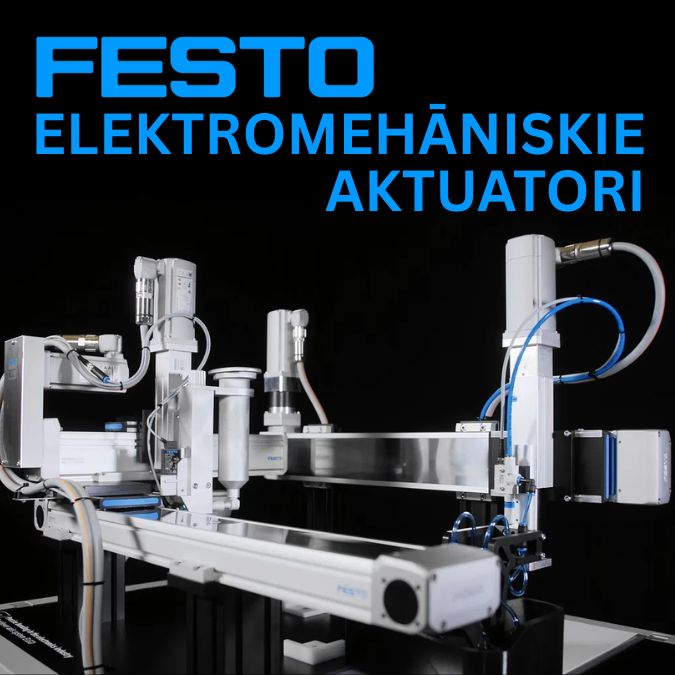
In production equipment, motion must occur at the right time, in the correct position, with controlled speed and without unnecessary mechanical overload. That is precisely why electromechanical actuators are increasingly replacing pneumatic cylinders. Festo — one of the leading industrial automation manufacturers (founded in Germany in 1925) — offers a wide range of pneumatics, electric drives and control components.
It is worth considering an electric drive when position, speed and motion profile are part of process quality — not just "extend and retract".
Electromechanical actuators are well suited if you need:
precise positioning;
repeatable motion with controlled speed and acceleration;
stroke length over 1000 mm;
short cycle times and smooth motion without pneumatic impacts;
lower energy consumption during motion;
integration with PLCs and industrial networks (PROFINET, EtherCAT, EtherNet/IP, Modbus TCP).
Pneumatics is still a good choice for simple, fast motions between two end positions. An electric drive becomes interesting when motion needs to be programmed, recipes changed, product formats adapted or multiple axes synchronized.
The offer includes linear axes, electric cylinders and slides, rotary actuators, electric stops, handling modules and mounting accessories.
Selection starts with mechanics: what motion is needed, how large the load is, what the stroke is, what speed is required and in which position the axis will be mounted. Only then come the motor, drive controller and communication.
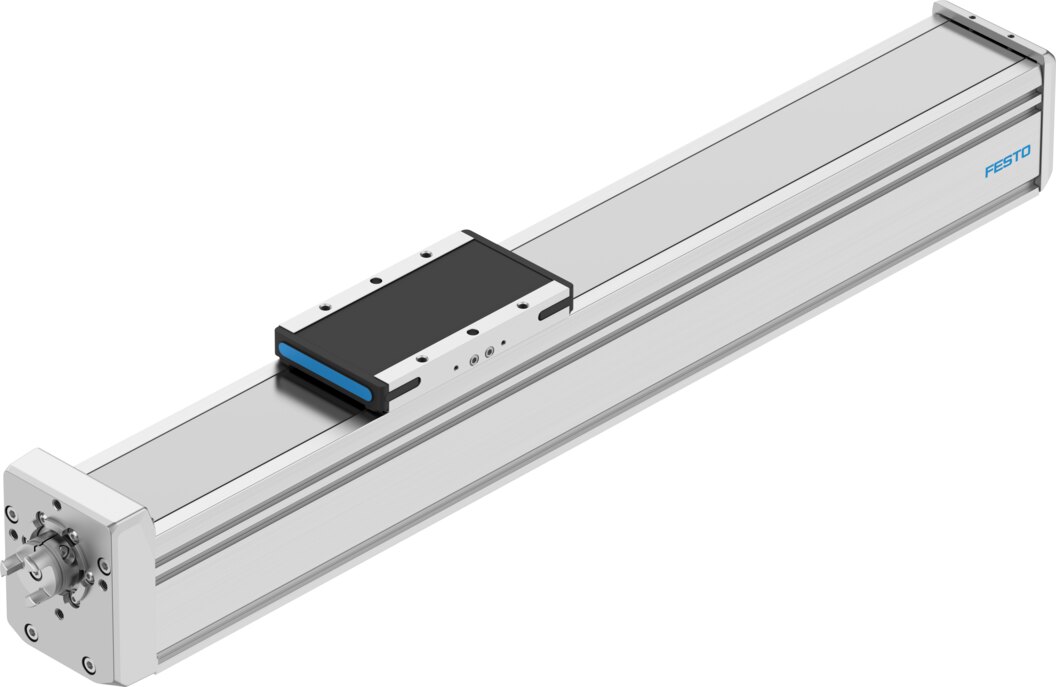
ELGD series is intended for machine building and handling systems with a compact design, rigid mechanics and precisely controllable motion.
ELGD-TB — a toothed belt axis for longer distances and higher speed (stroke up to 8,5 m);
ELGD-BS — a ball screw axis for precise positioning (stroke up to 2,5 m);
ELGD-WD — a wide version with lower weight and reduced profile height, while maintaining good rigidity and guide load capacity. A good choice in situations where space and mass matter, but the mechanics must not become flexible.
ELGC series is intended for smaller machines, desktop systems and compact mounting — in small parts handling, electronics assembly and testing equipment.
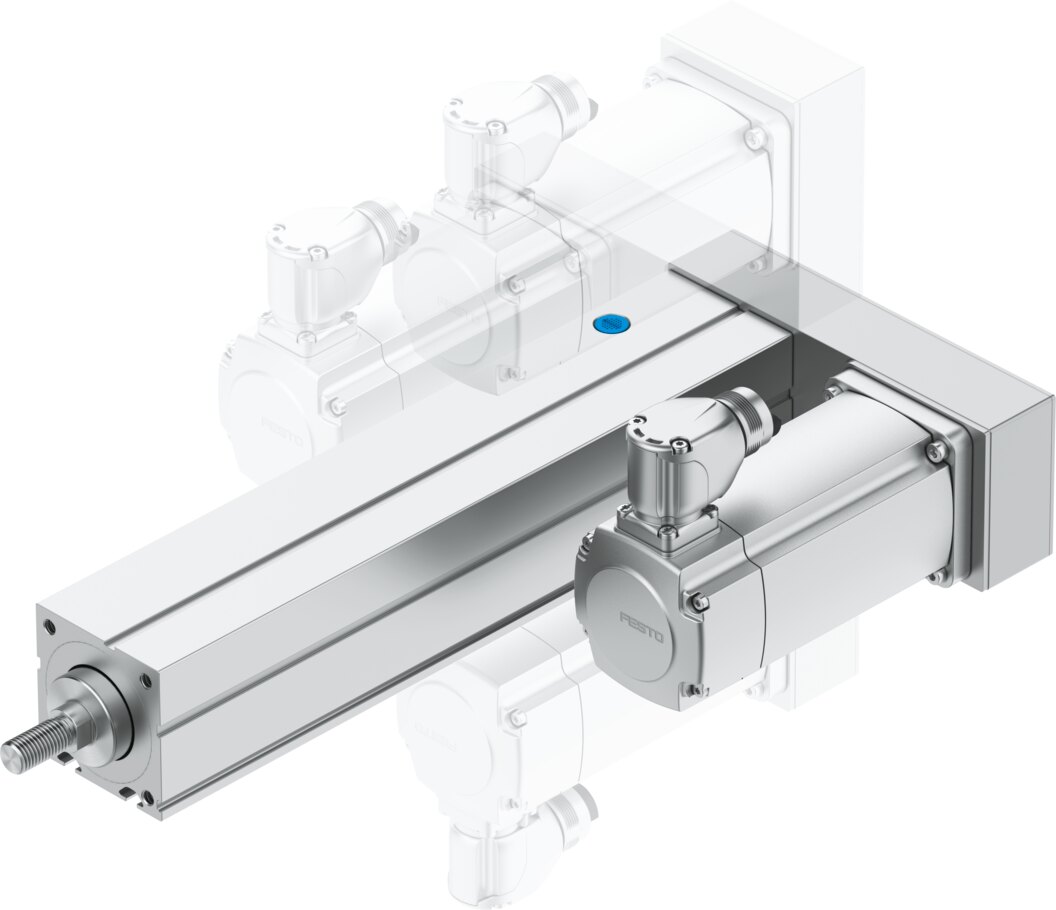
Designed for linear motions with precise and repeatable positioning. Depending on the model, a ball screw or trapezoidal screw drive is available, with strokes typically from 5 to 500 mm. Exact data — stroke, force, speed, IP rating, mounting and compatible motors — must always be checked in the specific model datasheet.
EPCC — a compact ball screw cylinder for precise and fast positioning. Suitable for assembly systems, testing equipment and moving small parts.
EPRF-BS — a stainless steel cylinder for environments with high hygiene requirements (food, pharmaceuticals, packaging). In addition to stroke and force, IP protection, materials and compatibility with washdown mode must be checked.
EPCE (Simplified Motion Series) — a simple electrical alternative to pneumatics without full servo system configuration. Suitable for sorting, ejecting, distributing and testing.
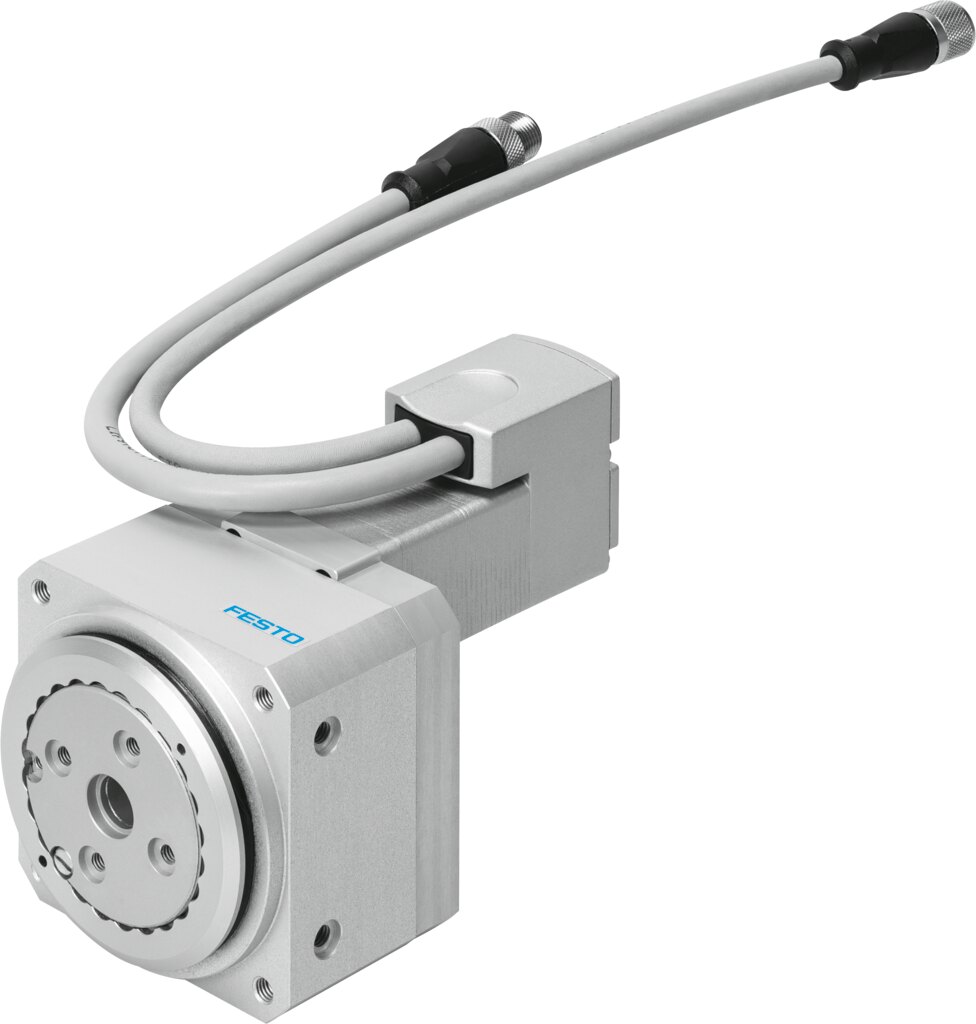
Provides controlled rotational motion — for turning parts, angle positioning and pick-and-place assemblies. Festo offers rotary modules with toothed belt drive, stepper motors with gearboxes and units with integrated motor and drive electronics.
When selecting a rotary actuator, the key parameters are torque, rotation angle, repeatability, speed and type of control.
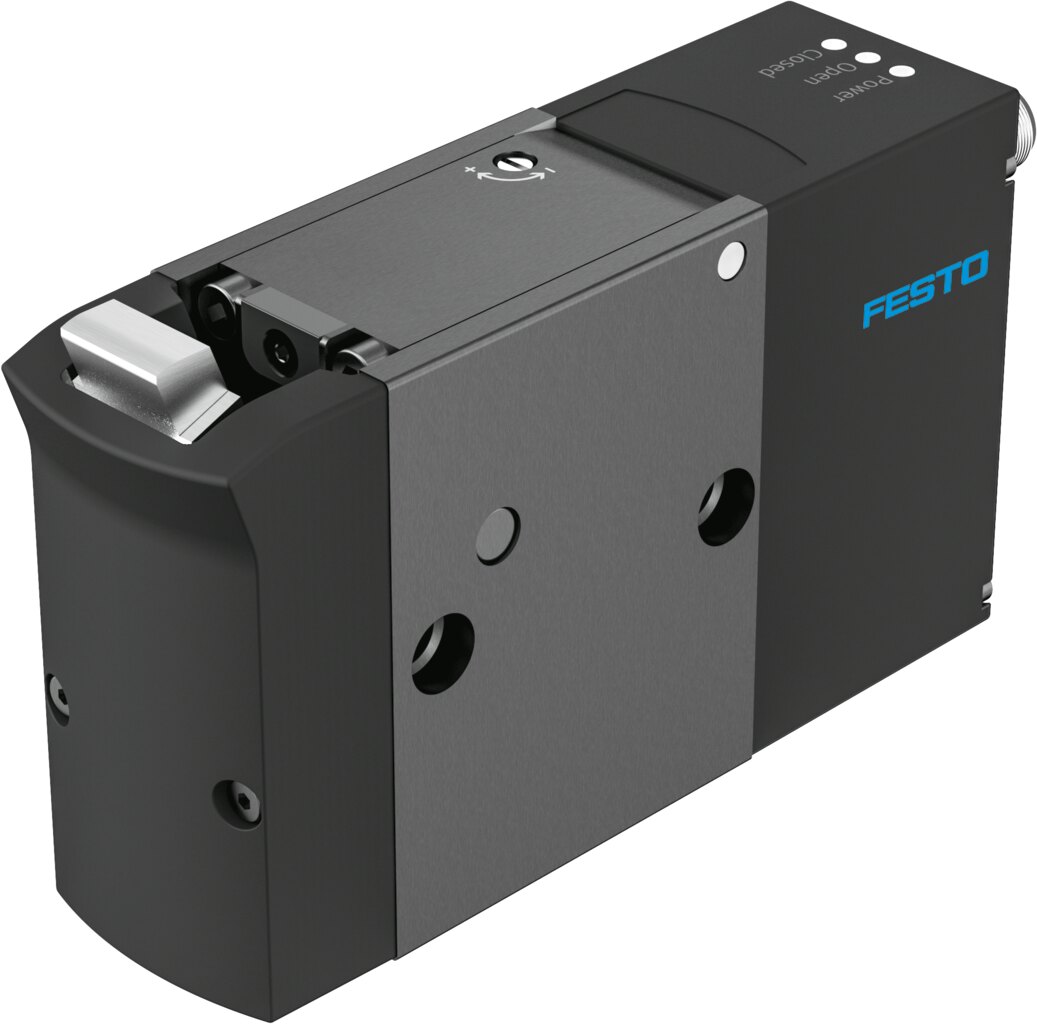
In conveyor systems, they stop carriers, pallets and other transport items gently, quietly and safely (0,25–100 kg). Power supply, communication and logic processing are integrated in the device itself, so the stop can be connected directly to the PLC without a separate motor controller.
A good alternative to pneumatic stops when compressed air is not desired, quieter operation is needed or simpler integration with the control system is required.
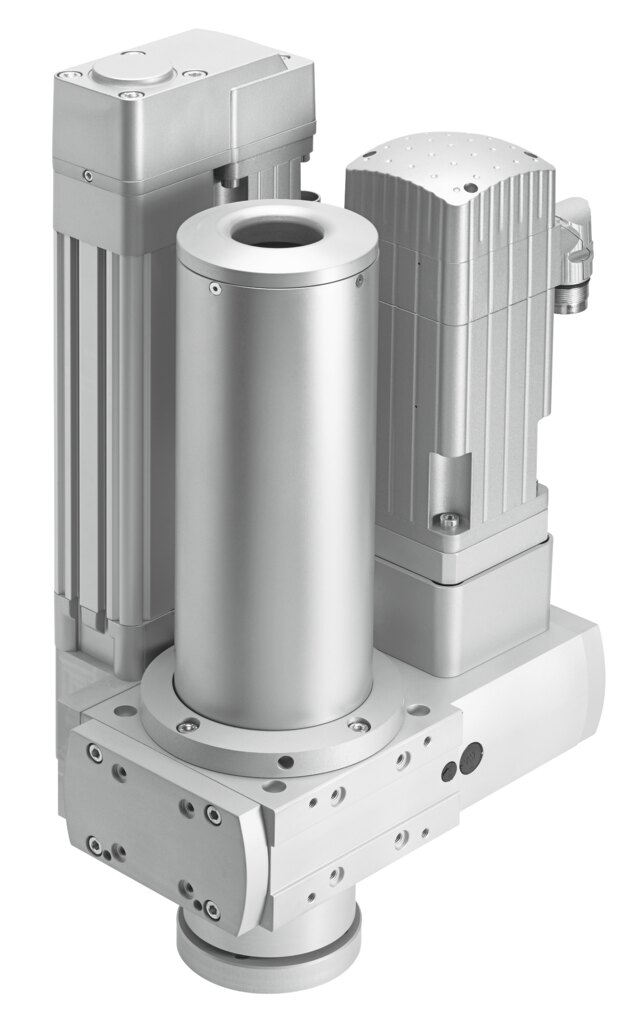
Combines several motions into one mechanical unit, reducing the need to assemble a solution from separate components. A rotary-linear module combines linear and rotary motion with independent positioning; a rotary gripping module helps grip, rotate and align small parts. Used in laboratory automation, electronics and small parts assembly.
Complete system: axis + motor + drive controller + sensors + PLC. CMMT servo drives support PROFINET, EtherCAT and EtherNet/IP. Modbus TCP availability depends on the specific configuration. IO-Link is not automatically available for all electric drives — always check the documentation of the specific model.
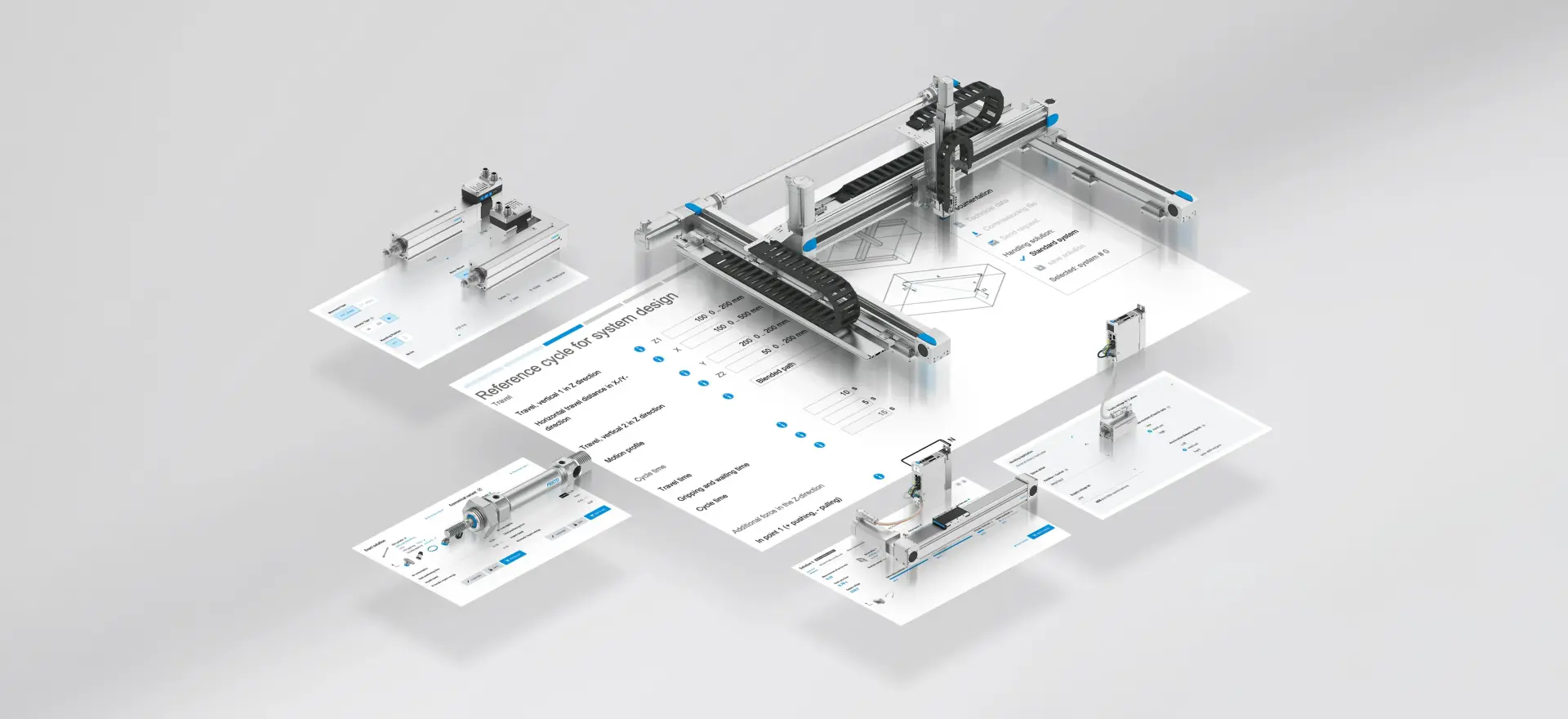
Electric Motion Sizing helps select a compatible axis, motor and drive combination based on application data. Handling Guide Online is intended for configuring multi-axis handling systems, and preparing CAD models and documentation.
Festo electromechanical actuators are used in machine building, the automotive industry, food and beverage production, pharmaceuticals, electronics, laboratory automation and logistics.
Electronics and semiconductors — precise, repeatable and gentle motion reduces the risk of part damage.
Pharmaceuticals and laboratories — clean, repeatable motion with good traceability for dosing, sample handling and positioning.
Packaging and logistics — short cycle times, programmable stop points and adaptability to different product formats.
Food and beverage production — hygiene, cleaning requirements, materials and IP rating must be checked. Not every actuator is suitable for a washdown area.
Battery production — process cleanliness and material compatibility are important. The ELGD-TB documentation includes a note on suitability for Li-ion production, but compliance must always be checked for the specific project.
Stroke, direction of motion, load and center of gravity
Cycle time, speed, acceleration
Mounting position and available space in the machine
Required repeatability
PLC and communication protocols
Environmental conditions: IP rating, materials, cleaning requirements
Service and spare parts availability
Selection based only on stroke. Stroke is only one parameter. Load, speed, acceleration, torque and mounting position are equally important.
Replacing pneumatics without re-evaluating the process. An electric drive is not an "electrical pneumatic cylinder" — it requires correct sizing and parameterization.
Unchecked communication compatibility. PROFINET, EtherCAT, EtherNet/IP, Modbus TCP and IO-Link are not available for all products — check the specific model.
Ignored environment. Moisture, dust, washing and temperature can be decisive, especially in the food and pharmaceutical industries.
Festo electromechanical actuators are suitable for equipment where motion must be precise, repeatable and programmable. They complement pneumatics well or replace it in processes with changing parameters, longer strokes and higher precision requirements. The main thing is to choose mechanics, motor, controller and communication that fit the specific task, rather than simply the "most powerful" option.
The range and specifications of Festo electromechanical actuators can be checked in the lasma.eu catalog. In selecting a specific solution, the ZTF Lāsma team helps evaluate the options and choose the most suitable one.